Showing posts with label Carol Clover. Show all posts

Friday, 3 January 2014

Women in Horror Month – An Interview

Luckily, I am far, far from the only person preoccupied with the gender dynamics of the horror genre. I constantly discover new and different approaches that people are taking to this, in my obvious opinion, endlessly fascinating and diverse subject.

And thankfully, not all of those approaches are as abstract and theoretical as mine.

A while back, I discovered a page on Facebook called Women in Horror Recognition Month. I immidiately followed it and noticed that they were posting a lot of cool links, but I didn't really know anything about the people behind it or if there was anything more than a Facebook page (granted, I could have easily figured that last one out on my own if I hadn't been so lazy). So when the team over at the Norwegian site I write for, Filmamasoner, were putting together a series of articles, reviews and interviews for Halloween about feminist approaches to horror, Women in Horror... was one of the first things to pop into mind.

Below is the full and (practically!) unedited interview with the lovely Hannah Neurotica, the wonderful brain behind the initiative. You can tell by some of the questions (and their answers) that this was meant for an audience who might necessarily not be hugely into horror, and that it was meant to be published pre-Halloween, but everything that Hannah says is still relevant and pretty damn interesting.

Enjoy!


First of all, what is WiHM?


Women in Horror Month (WiHM) is an initiative to recognize women in all facets of the horror industry (film, visual art, writing, theatre, etc) from around the world. WiHM wouldn't exist without those who create film festivals, podcasts, blogs, donating blood, and other creative mediums to showcase women's contributions to the dark arts. Our organization helps foster and promote events, it's so exciting to what DIY events (online and on land) people develop each year in there own communities. Our goal as an organization is to assist underrepresented female genre artists in gaining opportunities, exposure, and education through altruistic events, printed material, articles, interviews, and online support. Anyone, anywhere, can take part in this celebration.

How did it all start, how did you get the idea for this project?


The idea came to me while sitting on my couch feeling frustrated and exhausted by the outcome of an interview I'd done that week with CBC radio. It was just the tipping point for me & my anger about the horror industry (well, the entertainment industry in general) continually ignoring women's contributions and treating female horror fans as an anomaly. I was upset by lack of visibility, lack of opportunities, and rampant assumptions about the relationship between women and the horror genre both as artists and consumers.

I'd been making Ax Wound: Gender & The Horror genre for years at that point and it felt like a natural progression. As they say: if you are not happy with something going on in the world, then do something, don't just complain. You don't have to lead a revolution or part the sea – just start a conversation with someone. That is a huge step. Right now is an amazing time: there are endless platforms for innovative social change. Get creative. Don't be afraid. If you are sick of being marginalized I guarantee you are not alone – you don't have to be. They key is community and supporting each other. Reach out to people. Drop your ego. Focus on the cause with genuine determination and passion – that is something others will want to be part of too.


What are your feelings about the Final Girl concept? Who is your favourite (or least favourite!) Final Girl?


Carol Clover
's book "Men, Women, and Chainsaws" was pivotal to film/gender studies discourse. Her observations inspired academics, film buffs, and eventually lead to the genre being more self-aware (mainstreaming the concept) with films like Scream, The Rise of Leslie Vernon, Cabin in the Woods, etc. So, on its own the concept/book is something I respect deeply and should be respected as a serious contribution to film theory. I even have a tattoo that says Final Grrrl on my wrists because to me, it represents overcoming odds and survival. Does that mean I think that her book was a perfect reading of slasher films with no room for further exploration? Of course not. The book is very Freudian and she openly states in the introduction that the book was written with the male spectator in mind. I would love to see her write an updated version considering the self-awareness that exists right now as well as the changes in what the Final Girl is allowed to partake in, yet still reign supreme.


I guess what I am saying is I don't get how the concept can be something one "likes" or "dislikes." It's an observation that had huge impact on the way we look at and study horror films. I think people who are turned off when they hear the word are probably just assuming that a final girl can't evolve or don't view it for what it is. She has gone from virgin to druggie – but she still remains "final." Again, all interesting things left to explore. Nancy from Nightmare on Elm Street is my favorite always. I view the Final Girl concept as an entry point of study with much more to build on.

There are genre critics who claim that the horror genre is inherently misogynist. What is your message for them?


It depends if we are talking about the horror film industry or the film characters themselves. The genre is no more misogynist then any other genre. Romantic comedies.... Need I say more? I do think horror actually has the capacity to explore social issues in a way no other genre can. As for Hollywood – there  is this rumor going around that vaginas behind cameras will bring on the apocalypse. I think we can prove them wrong, and we are making small advances, but we have a long fucking way to go. 


Nancy setting MacGyver style traps for Freddy


Do you think there is a difference in how women in general and men in general watch and enjoy horror films?

Yes, in the sense that human beings view everything in life from subjective experience; that which would be influenced by gender, sexuality, culture, socioeconomic status, life experiences. From my observations the biggest point of disconnect between genders when viewing a horror film involve the usage of graphic rape scenes. This is something one could assume would be a subject that women will have a different reaction to based on the sick statistics of violence against women being such an insidious and rampant reality. Of course this is a very general response.
Aside from viewing – I think an exciting aspect of seeing horror films that are made by women is that fresh perspective of fear that men wouldn't think to explore in certain ways because its not part of their daily reality.

Who is your favourite Woman in Horror?


I suck at pinpointing a favorite film/book/anything so a person is off the charts impossible. One of the aspects I love about WiHM is meeting so many amazing women working in a wide array of creative modalities - all with something unique to contribute that as a whole form this sense community.

So I can't say a favorite but I can say the type of women I love most are those who are not afraid to speak out, be creative, and who don't build their sense of self off unessasary competition or belittling of other women. We need to get rid of this fear that the success of one woman somehow translates to less success for us. It's quiet the opposite. There is room for all of us to reach our goals and the best way to make it happen is building each other up – something women generally speaking don't seem to be the best at in practice.

The paradigm we live in thrives on keeping women from getting along – imagine how crazy awesome shit would be if we flipped that? So a favorite woman in horror would be one who views other ladies success as a step in the right direction and not a personal attack to their own career. Off the top of my head some examples would be Jen & Sylvia Soska, Jovanka Vuckovic, Karen Lam, Jennifer Lynch....

Finally, if you could recommend three horror films for our readers, which would they be and why?


Hmm... Oh man, I can only pick three? I suck at these questions too. Okay well, most recently I have been telling my friends to check out The Bay. It is one of the best examples of how to do a found footage and still make a high quality/watchable film. I think I have watched it five times on Netflix.


Just another day in the office for American Mary


American Mary is a great one written and directed by Jen and Sylvia Soska. It's a beautifully shot dark film. Carnival of Souls (1962) – if you haven't seen that then you need to stop what your doing right now and put it on (no, actually, wait until Halloween) that would be perfect for Halloween. It's creepy as fuck. Also, if you want to watch short films, features, and trailers of films written and/or produced by women I have been working on this ongoing collection here: http://womenmakehorrorfilms.tumblr.com/

This is by no means a reflection of all that is out there. In fact, this is just a tiny miniscule example and there is more and more being added all the time. There are also some features directed by women coming out soon which I can't wait to see like Evangeline (dir. Karen Lam), DYS (dir. Maude Michaud) among many others.

A Norwegian translation of this interview can be read at Filmamasoner.no.

Saturday, 7 May 2011

From revenge to rape, and back again. Part 1

This post has been a long time coming. And not only because it's a long time since I've posted anything. I've been trying to make sense of the rape-revenge sub-genre ever since I was introduced to it (once again, credit goes to Carol Clover). Maybe not even so much the genre or the movies themselves but something to say about them. Can anything sensible be said, that isn't already said elsewhere?

For those not familiar with the phenomenon: a rape-revenge film is exactly what it sounds like. A person (typically a woman... I'm not aware of any examples where a man is the victim. If you know of any, please comment below) is raped brutally, seemingly unprovoked. She is then left for dead or at least assumed unwilling or unable to do anything about the situation. Her hatred builds up and drives her to perform hideous acts of revenge. Sometimes, the person executing the revenge is not the victim herself but rather someone close to her (especially, of course, in the cases where the victim is actually killed), such as a boyfriend or parents. The rapist(s) is often killed. There are variations, as you will soon enough see, but that is the standard outline.


Not strictly speaking the first of its kind, I Spit On Your Grave (1978) has certainly come to be the defining movie of this bizarre sub-genre.


There was a remake of this film released last year. In 2009, there was a Norwegian rape-revenge film called Hora ('The Whore'), which made all sorts of claims about being the first Norwegian grindhouse film and other things besides, and as far as I am aware it never said anything about being a remake. It was, though. This made me think, again, about what this genre actually is. Can it even be said to be an actual genre, a type of film, or is it just basically one film and endless remakes and variations?

In this post I will try to provide you with a kind of history of the evolution of the rape-revenge film. In some cases, it will be debatable whether the films I'm talking about are actually rape-revenge films at all. Debate away! I've mainly just picked films that help to illustrate my point. Which is hinted at in the title of this post.

Ready? Let's go!

For many reasons, the brutal visual representations of rape have not been around for many decades. Censorship rules and standards of what might be socially acceptable have, as you might be aware, not always been the same as they are today. Movies have always included stories more or less about sex though, and women scorn, and bitter, hateful vengeance. Look, if you will, to the 1958 classic Attack of the 50ft Woman:

When an abused wife grows to giant size because of an alien encounter and an aborted murder attempt, she goes after cheating husband with revenge on her mind.
Here, the theme of female revenge over a male object is brought into horror, and even sci-fi, terrain. Granted there is no hint at an actual rape, I'm sure you could interpret a rape into it if you really wanted: maybe the alien raped Mrs. Archer? Maybe it was a forced marriage that could on some level be likened to rape? Maybe it was just what is popularly referred to as "emotional rape"? Who knows. The revenge motif is clear, and we're talking a real physical type of revenge.


By 1972, things were naturally different. For a start, Wes Craven was in business. And in The Last House on the Left, he is introducing one of his favourite themes: teenagers rebelling against their parents. With added rapists.

Two girls get raped in this film, and the representation of the two rapes are quite different. The first rape is that of the tougher girl, Phyllis, and is not very graphic at all. You hear some noises and Phyllis telling them to 'stop it', but overall it almost seems as if it was a far worse experience for her when she was forced to 'piss her pants'. The rape of her more innocent friend Mari is far more exhausting on the viewer, and the experience of being raped is here pretty much likened to death. Mari is being stabbed in the chest almost while she is being raped (but I think the stabbing takes place just after the other kind of penetration), blood spurts out, she screams and cries and begs for her life. After being raped, Mari gets up, covers herself up and walks into a lake. She is then shot. It seems almost that death is the only possible consequence of being raped.

It is Mari's parents who punish the brutal gang for their crimes after they realise she has been killed. Maybe this is another "mother and father know best" kind of thing? Coming from Craven though, that would be a bit strange (see: A Nightmare on Elm Street (1984), The Hills Have Eyes (1977), The People Under the Stairs (1991), the Scream films, etc.). Interestingly (though a bit of an aside), one of the men repsonsible for Mari and Phyllis' rapes and deaths, dreams of Mari's parents taking out his teeth. Apparently this can represent 'a fear of rejection [or] sexual impotence', or a loss of 'childhood innocence'.


Although Jennifer in ISOYG is the victim of that film as well as the avenger, she certainly has common traits with Mari's mother. As opposed to Mari, they are both fully adult women, who do not hesitate to use sex as a way of getting back at the ones who have somehow hurt them. In both films, the men do not seem to have any doubts about the legitimacy of the women's approaches – maybe believing themselves to be that irresistable, or in Jennifer's case that they have somehow changed her mind about them; that deep down, she must have enjoyed the rape(s).

I realise I have not really paid much attention to the rape scenes themselves. If you have not seen these films you will just have to take my word for it: they are there, and they are quite graphic. Indeed, 'the length of the rape sequence, the prolonged physical and mental anguish suffered by the victim' were among the reasons why ISOYG was originally refused classification. (Here is a link to the Video Nasties documentary.)

In order to prevent this post from getting so long that no one will want to read the whole thing, I will pause here and get back to you with a part 2 within a couple of days. There will be quite a leap in time in terms of films being discussed as well, so this is a good place to take a break.

Oh, and while we're all here: it is now possible to be become a fan of Tits And a Scream on Facebook! I set it up so that I can share funny links and film clips and stuff, and still keep this blog as "clean" as possible. See you there, guys n gals.

Wednesday, 24 November 2010

Antichrist and the Nature of Horror

"the feminine is not a monstrous sign per se; rather, it is constructed as such within a patriarchal discourse"
Barbara Creed

As you will no doubt be aware, Lars von Trier's 2009 flirt with horror, Antichrist, found itself at the centre of quite a lot of controversy upon its release. At the core of the debates surrounding the film has been the question of misogyny: is the film as misogynistic as many critics seemed to believe, or is it "actually" just one big feminist statement? The minds of the public will probably never be made up about this, and both sides seem to have little trouble arguing a strong case with proof  taken exclusively from the movie itself. While I am normally all for a gender centric analysis of horror films, it seems to me that maybe this is missing the point a bit in the case of Antichrist: when it is so obviously quite possible to to make such strong arguments on both sides, couldn't this be a sign that the whole excercise might be just a bit pointless? By all means, I'm a big fan of using movies to make a point of some sort; but this is a film that can basically "mean" anything that you might want it to. However, there's no real getting around the fact that there is a lot of talk about fear in the film. The main topic of discussion is what makes the nameless female played by Charlotte Gainsbourg, afraid – or what makes people, in general, afraid. Nature is being named as one source of horror and to me, it deals quite explicitly with the very nature of horror.


 The link between nature and horror is hardly something new. Linking sex and nature with horror likewise. One scene that popped to mind whilst watching Antichrist was from The Evil Dead (1981). You know the one, when the girl walks off into the forest at night and the forest itself literally rapes her. I won't pay any particular attention to potential rape motifs in Antichrist in this post (although I will return briefly to the Freudian aspects of it a bit later on), mainly because there are just too many and it would take up too much space in a post that is about something different. But I thought that specific scene was worth mentioning anyway. For example in relation to Charlotte Gainsbourg masturbating furiously in the forest, then being joined by her husband who gives her a good slapping.

With this film, Lars von Trier seems to bring the sex back into the world of horror. Because in recent years, it has become less and less essential to the horror genre, as far as I can tell. It is now mostly about the torture, as discussed in my previous post, and the focus has been removed almost entirely from the sex which was always a major source of horror in the past. Look at Psycho: you don't witness any sex acts actually taking place on screen, yet still the entire film is absolutely chock-full of it. Marion and Sam get dressed in the hotel room; you see Marion in her underwear several times and obviously naked in the shower; Norman was aroused by Marion (according to the psychiatrist in the final scene), etc etc etc. Now, even something like Hard Candy (2005), which is in its own way all about sex, doesn't show any actual sex take place. In Antichrist though, there is LOTS of it, and it is very detailed. As anyone with even the vaguest interest in traditional horror films will know: bad things happen to people who have sex. Especially sex of the more irresponsible kind, and what could be more irresponsible than to let your child fall to his death while you are busy lovemaking?


When I was watching the film for the first time a couple of weeks ago, it took me a good half hour or more to try and figure out what on earth I was even watching (and I've been led to believe that a lot of people never do figure that one out). I had heard and read so much about how Antichrist was a horror film. For a while, I didn't see much to back up this statement. Sure, lots of psychological stuff, some of it quite creepy. But enough to make it a horror film?

After a while, though, I realised just how much of a horror film this is. Maybe even more so than most of the ones we like to call classics, or essential, or just traditional scary movies. Because here is a film that is about fear and about horror, rather than just trying to scare its audience with a man in a mask and making us jump when he appears out of nowhere and kills some people. (A film's "quality as horror film", says Carol Clover, "lies in the ways it delivers the cliché".) For me, some of the conversations that the nameless couple lead are sufficient "proof" of this. And I will now go on to provide you with some valuable quotes from said conversations:

Before leaving for Eden, He tries to find out what She is really afraid of:
H: Let's make a list of things that you are afraid of.
S: But I don't know what I'm afraid of … Can't I just be afraid without a definite object?

Later, one evening at Eden, they do a little "therapeutic" excercise, in the form of a role play (this is after He has placed "nature" at the top of She's "fear pyramid"):
H: My role is all the things that provoke your fear. Yours is rational thinking. … I'm nature. All the things that you call nature.
S: What do you want?
H: To hurt you as much as I can.
S: How?
H: How do you think?
S: By frightening me?
H: By killing you.
S: Nature can't harm me. You're just all the greenery outside.
H: No... I'm more than that.
S: I don't understand.
H: I'm outside, but also... within. I'm the nature of all human beings.
S: Oh, that kind of nature. The kind of nature that causes people to do evil things against women?
H: That's exactly who I am.

And finally, about She's research for her thesis on gynocide:
S: If human nature is evil, then that goes as well for the nature of...
H: ...of the women?
S: The nature of all the sisters. Women do not control their own bodies. Nature does. I have it in writing in my books.
H: The literature that you used in your research was about evil committed against women, but you read it as proof of the evil of women?

It is difficult to even know where to begin with this. I have watched these scenes twice now and each time a hundred different thoughts have popped into my head, but I will try to make it as short and as relevant as possible. It is made clear from these excerpts that we are in fact dealing with the kind of irrational fear that most horror films do indeed play upon. Ie., we know fully well that Freddy isn't going to slice us open as we sleep, but we still fear it. Notice how it is made very clear that there is a mutually exclusive opposition between rationality and fear. I think it's also really interesting that they bring up the idea of being afraid, but not because of something specific. Most horror films will have a specific object of fear; however, they will inevitably depend upon the ability of the viewer to be genuinely afraid of something that is not in fact dangerous to them in any real way. Furthermore, there is, of course, talk of women. I'm not, after all, trying to deny that there are gender issues being somehow or other adressed, or at least pointed out, in this film. What I do think about it though, is that rather than von Trier trying to make some statement about these things, be it a misogynistic or a feminist one, he is simply pointing out that this is a major issue in horror tradition. The nature of women, and the nature of men (or, as She aptly puts it, "people". Who are "people", historically speaking?).


There is at least one other blogger who somewhat agrees with me on this, saying that "Ultimately, I think he's making a horror film that suggests misogyny is at the core of all horror films and religious parables. Actually, to go even further, I think his attack is on the misogynist underpinnings of western rationalism as such."

And let's not at any point forget that there is one person here to represent rationality and science, and another to represent wildness, raw nature, and even evil. That the former is male and the latter is female is not, I believe, because von Trier believes that this is a true and accurate representation of the genders as such: rather, he is only pointing out what traditional horror has been doing for decades, if not centuries.

Another thing that has been very present in many a modern horror film, and especially in the many theories and criticisms surrounding them, is of course Freudian theory. Barbara Creed's essay Horror and the Monstrous-Feminine is the place to start if you are interested in looking into this. In the essay, Creed quotes Freud as saying that the Uncanny is "something which ought to have remained hidden but has come to light". There seem to be many things in Antichrist to which this description can easily be applied. Most of all, though, it seems to me to be certain elements of human nature that ought to have remained hidden, if you follow the logic of the film. Not only the evil female nature, which admittedly gets paid the most attention: even the big protector of rationality in the film ends up performing what can only be described as unhumane acts. For once though, I don't want to give away the ending. Anyway, Freud and that: again, so many things to choose from, and I'll settle for mentioning some of the most obvious things. There is a mother – father – son motif turned more or less on its head; there is the fox hole and the "thick" trunk right next to it; He tries to hide in the fox hole when She is chasing him, only to be buried alive in it. This happens after She has practically castrated him, and before she "practically" castrates herself (who says women can't be castrated?). Earlier in the film, after her psychiatrist husband has told her about having some odd dreams, She tells him that dreams don't matter to modern psychology: "Freud's dead, isn't he?"


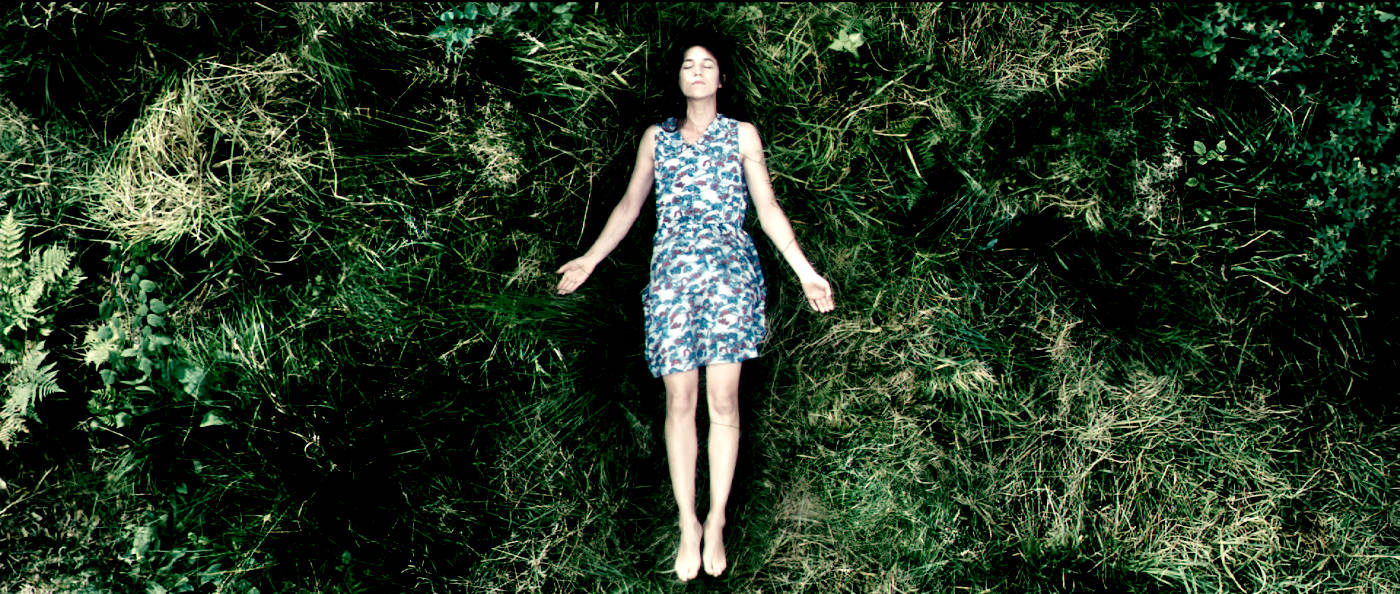
 I want to return to He's attempts to rationalise She's fear. He tells her in the early stages of the film that "grief is natural". He tries to make her realise that the things that she fears are not actually dangerous, and he does this at first by seemingly hypnotising her and making her go into Eden, lying down on the grass and "melting into the green". By doing this, he is almost forcing her to become part of the thing that she fears the most: nature. She is convinced that nature is evil, and when she is forced to be part of nature, she becomes "evil". She clearly believes in the ability of his words to become reality; this is illustrated through one of their discussions about her thesis, when She accuses him of finding her subject "glib". She admits to never having finished her thesis, saying that "all of a sudden, it was glib". If this is the logic we are to follow, it might well be that He makes his biggest fatal mistake (other than claiming, in the role play mentioned above, to be all of the things that she is afraid of...) when he tells her that "your thoughts distort reality. Not the other way around". Her thoughts, her way of seeing the world, do indeed distort and change reality for both of them.

He believes that She is suffering from anxiety, and tries to persuade her that "anxiety can't make you do something that's against your nature". In response, she certainly does her best to convince him of the true nature of, well, nature. And finally, in yet another attempt to rationalise, He tries to explain to her that "obsessions never materialise. It's a scientific fact". Ironic, then, that her obsession with gynocide influences him to put an end to it all in the specific way that he does.

(I have a feeling that I might return to this one.)

Sunday, 26 September 2010

Looking Through Gary Gilmore's Eyes

I might as well introduce you properly to Carol Clover before we go any further. Her essay "Her Body, Himself" (originally published in her book Men, Women and Chainsaws [1992], and later in the excellent compilation edited by Barry Keith Grant: The Dread of Difference [1996]) is what got me into horror film theory in the first place and it is one of the most groundbreaking essays in the field. It is also one of the very first critical essays to pay any kind of (serious) attention to slasher films. Obviously some of it will be a bit dated by now, but it remains the origin of some of the most essential terms and ideas – especially for those of us interested in the slightly icky gender issues side of horror films and their theories. Perhaps most importantly, Clover coined the term Final Girl – used to describe the girl who is typically left alive at the end of a slasher film. However, there is another issue which she spends just as much time discussing in the essay, namely that of audience identification in horror films. She makes lots of claims and arguments relating to that which I'm not going to go into detail about here (for now, anyhow), but what I will focus my attention on is her critique of the widespread use of I-camera in these films (pretty self explanatory: bits of the film are being shown as if you are watching through one character's own eyes):

"Much is made of the use of the I-camera to represent the killer's point of view […] By such means we are forced, the argument goes, to identify with the killer", Clover says, and then of course she goes on to make some big and very long-winded points about the nature of "the processes of viewer identification", and she only entertains this idea of forced identification through I-camera for so long, but she never really returns to this point to disprove (or even prove) it.


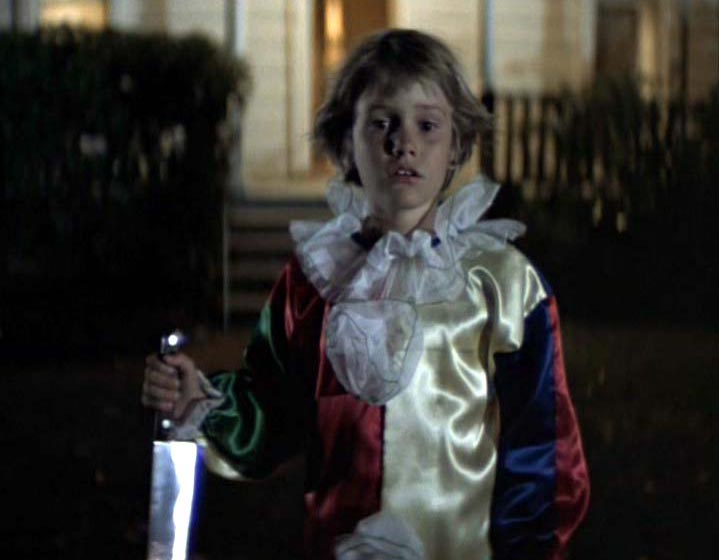
For me, there are two scenes from two films that first spring to mind when I-camera usage is being discussed. The opening scene to Halloween (1978) in which the young Michael Myers lurks around the house and eventually kills his sister; and very near the beginning of Friday the 13th (1980) where the killer walks through the camp, watching the careless youths as they sleep in their beds or whatever it is they are doing. (Of course, in this film you get a lot more I-camera being used because you're not supposed to know who the killer is...) The thing that strikes me about both of those instances, and any other that I can think of, is how all you see through the killer's eyes (as it were) are apparently normal people engaging in completely normal activities – whether that's having sex, sleeping, brushing their hair, taking a shower, whatever. So I'd argue that you're not really forced to identify with the killer at all even though you're seeing things from their perspective – because there is nothing in the scene that would make you (assuming you're a normal, well balanced person) think to yourself, "what an arsehole, I would definitely kill them". If anything, it only serves to make you more distanced from the killer, as there is no logical or recognisable reason presented to you for why you should want to kill the people you are watching. So this specific use of I-camera only really illustrates how completely alien the killer is.


Another thing that interests me with this is how well it works with everyone's favourite deconstructionist Jacques Derrida's musings on the feeling of horror upon seeing yourself seen (yes, I did just go there). JD initially talks about the feeling of bewilderment and unease when he caught his cat staring at him (he was also NAKED at the time, dear me). His theory is something about how thoroughly and deeply unsettling it is for a person to realise that they are being watched – ie. seeing themselves seen – by some Other being. Preferably not another human being, that wouldn't be as creepy, and that happens quite a lot as well. This was first explained to me in the context of The Birds (1963), and it is argued that a large portion of the feeling of unease and even horror in the film comes from the fact that we witness the birds actively watching people.

And I think that this can, and should, be applied to the discussion of I-camera and (forced?) identification in more conventional slasher films. Yes, the killers are human in form, but one of their absolutely essential trademarks is that they are not ever entirely human. Mike Myers, for example, is described as "pure evil", with no human attributes left at all; Leatherface is another obvious example: he uses different masks to determine his "personality" and the way in which he behaves at any given time. Clover even backs me up on this one, claiming that the killer "may be recognizably human, but only marginally so".  Any more details about that specific aspect of it all will have to wait until some other time, though. I'm going get out of here while I've still got both Derrida and Clover behind me – but first, a summary:

So – even though it would be handy for a lot of feminist critique if it really were a case of "forced identification" where you identify with the killer and against his victim(s), that doesn't seem to me to be the case. The effect of the I-camera is a scary one, because you don't know who it is that's watching and you certainly see no reason why you should be on their side. It plays upon the spooky feeling you get when you think (or know) that you're being watched – even as you're participating in normal, everyday activities that shouldn't really work as motivation for anyone to gut you like a fish.