Showing posts with label freud. Show all posts

Saturday, 26 October 2013

Insidious: Chapter 2 (2013) and the rareness of tangible horror

The official opener of this year’s edition of Ramaskrik, the prime Norwegian horror film festival, was James Wan’s sequel to his 2010 hit screamer, Insidious. I have not actually seen the first movie, but I did not at any point feel that my lack of knowledge of the first film left me in the dark. I definitely want to see Insidious at some point too, to see if it makes me think of its sequel any differently. Anyway – please just have in mind when you’re reading this that I haven’t seen the first one, and also please don’t spoil it for me in any comments.

Ok. So. Insidious: Chapter 2 is a take on the classic haunted house story we all know and love. This is one of the first types of scary stories we become acquainted with as children, as we lie awake wondering what’s hiding in the closet, or trying to scare our friends into a similar predicament. So there’s no surprise that there are so many horror movie riffs on this theme, one of the most well known being the classic The Amityville Horror (1979, remade in 2005). One of the strengths of this sub-genre is the mere fact that it’s such a well-known theme, and one that everyone can relate to. Being afraid of those eerie sounds your house makes when you’re home alone on a dark night, not to mention the shadows creeping across the hallway, is something that everyone who has ever lived in a house can relate to. First, there were monsters in the woods; now, there are monsters in our houses.

In order for a haunted house-horror to actually work as a scary movie, it needs at least these two things: 1) an awareness of how many times you can have someone suddenly appear behind a closing door or in a mirror before it gets old, and 2) a mysterious or complex enough monster/source of horror to keep the viewer interested in one single location for the duration of a feature film. I am a big advocate for the subtleties of horror, of the ever-fading art of not making everything so god damned in your face and obvious in every single horror flick. Sure, you need the jumps and goose bump moments in movies like these, but to the human mind, the unknown is the very scariest thing there is. Which is why horror films that hint at the source of horror and leaves the rest to your terrified and paranoid mind to work out in gruesome detail, are normally the ones that can properly get under your skin. Insidious 2 handles the hinting and the mystery fairly well for a while; however, this is one of those rare movies that left me scared and at the edge of my seat even once the source of horror was fully revealed and we got a good, clear look at it. That, to me, is no small feat. Most movie monsters lose a lot of their power to scare you once you get a good look at them. Creepy woman ghost in Insidious 2? Only gets scarier.


I will give away a lot of spoilers, like details of the source of horror and who and what and why, so if you don’t want to know those things, you should come back after having seen the film. Otherwise:

We meet Mrs. Lambert and her son Josh in the early 1980s. They obviously live alone in a huge, old house. On the night that we first meet them, they receive a visit from one Elise Rainier, an expert in communicating with spirits and that sort of thing. Young Josh has been having a lot of bad dreams since they moved to this gigantic, dark house (imagine!), and his mother has noticed something weird in pictures of him: there seems to be some sort of dark figure following him around, moving in closer and closer on the young boy. Elise hypnotises Josh to tap into his mind and figure out what is going on and how much he actually knows about what’s happening to him. Josh tells Elise that the dark figure is a woman, who claims to be a friend. Elise goes searching around the house and finally finds something in the closet in Josh’s room, and as she tells Mrs. Lambert: “it is not a friend”. The thing, spirit or whatever it is, is apparently a parasite that wants to be Josh. It has come into contact with him because Josh possesses some kind of special power that allows him to see the dead in his dreams; trouble is, now one of them has seen him. And it doesn’t want to play nice.

Mrs. Lambert begs Elise for help, and they decide that Elise will try to remove (or at least reduce) Josh’s creepy ability and try to make him forget what he’s been through. Really, an incredibly malicious ghost is hunting your schoolboy son and you just want to make him forget that it’s there!? Oh well, we wouldn’t have many horror movies without people making a lot of rash and stupid decisions.

Apparently, this scheme turned out surprisingly well, until one day when Josh is a grown man with a family of his own, and one of his sons has drifted into a coma where he hangs out with dead people or something, and Elise has helped Josh go into the spirit world to get his son back. From what I gather, this was the main plot of the first film? Anyway, when Josh comes back from the dark side, Elise is dead, and what his wife Renai describes as “weird things happening around the house” just keep on happening. They go back do Josh’s childhood home to stay with his mother while the police investigate Elise’s death. Meanwhile, it soon becomes clear that whatever is haunting the Lambert family is not confined to a single, physical location – as some ghosts are. Before long, the weird shit gets out of control, and Renai and Lorraine (the older Mrs. Lambert) become aware of certain changes in their beloved Josh. Lorraine suspects that it might literally be old ghosts come back to haunt them, but because of Elise’s memory erasing all those years before, it’s difficult to tell for sure.

Elise’s assistant through many years, as well as a pair of newcomers to the whole spirit communication business, take it upon themselves to figure out what is going on. They team up with Lorraine and they end up at an old, abandoned hospital where Lorraine used to work back when Josh was an innocent, but oh so troubled kid. She recalls one patient she had, Parker Crane, who had been submitted to the ICU after trying to castrate himself. Freud ahoy, people! They continue to his old home and surprise, surprise: something bad is there. Turns out the bad thing is, SPOILER SPOILER, Parker’s completely fucking psychotic mother, who could never accept the fact that she had given birth to a useless son instead of an adorable little girl to dress up and have play with dolls and all that. So she just pretends that little Parker is a girl, calls him Marilyn and threatens him to accept the role, slaps him around for no good reason and is generally just a creepy as fuck bad bitch.


Believe it or not, Parker Crane did not turn out a normal person. Instead, he ended up killing a lot of young women (because his mummy told him to), and then lined up their corpses neatly in the basement of the house. He wore a black bridal dress while committing the murders, as a kind of disguise – and obviously very in line with the inherent gender confusion theme. Years after his death, Parker came back as a parasitic spirit who wanted to take over young Josh’s body to experience a childhood he never had. When that didn’t work out, he waited in the dark, and came back for grown-up Josh after he crossed into the spirit world to find his son (stay with me, now). He wants to be alive and part of a normal family. Trouble is, mummy dearest is still very much in control of him, and tells him that if he wants to stay alive he has to kill everyone around him. He doesn’t want to, but then teeth start falling out and Josh’s health generally deteriorating; and on top of it all, Elise’s assistant and his apprentices come after him. Let the killing begin.

In this way, Insidious 2 combines two age-old horror themes: the haunted house, and the unhealthy mother/son relationship. Luckily, the filmmakers have been clever enough to not rely too heavily on too many special effects when creating their ghosts, so that they remain scary even up close. Mrs. Crane is the scariest of all, with her white skin, black eyes and not even one tiny redeeming feature. We are shown flashbacks to her so called parenting methods when raising Parker, and it becomes very clear that this woman was not only made evil after her death.

Gender confusion is, as mentioned, a classic horror theme. Look no further than to Mr. Ed Gein, inspiration for a huge variety of classic horror movies including Psycho, The Texas Chain Saw Massacre, The Silence of the Lambs and many more. Little boys with dominant mothers apparently have little other choice than to turn out mentally disturbed serial killers – especially when they stay with their mothers as grown-ups, in the mothers’ twisted, isolated fantasy worlds. This is not so much Oedipal as it is an expression of fear of generally dominant women, which is a recurring motif in a broad range of popular culture. And in many ways, this represents what I base my objections upon when it comes to female (and some male) horror film critics and theorists who call out for more female horror villains. We already have the Final Girl, which is way more awesome, so do we really need to portray more women as monsters in the name of equality on screen?


However, subversive gender roles is mostly a good thing if done well, and often calls for a more interesting movie experience. And even though Insidious 2 isn’t really huge on conscious gender politics and symbolism, other than using gender confusion as an explanation for the source of horror (let’s leave that one for someone else to handle), its evil characters are really well done. They manage to be pretty in your face without being over the top – and that is a difficult balance in horror films. It’s pretty rare these days that I get genuinely creeped out by a scary movie, but throughout this one I was jumping in my seat, getting goose bumps up and down my arms and legs, and felt my heart race more than once.


If you’re looking for something new to watch this Halloween, in other words: look no further. Prepare to get scared.

Tuesday, 6 December 2011

"From Deep Space, The Seed Is Planted"

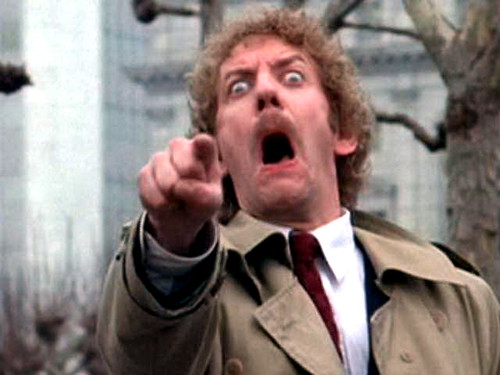
Philip Kaufman's 1978 remake of the sci-fi flick Invasion of the Body Snatchers, the original being from 1956, is a big favourite of mine. Not only has it got a young Goldblum and Donald Sutherland with a ridiculous perm and moustache, but it achieves what perhaps more scary movies, sci-fi or otherwise, should aim for; chills and horror without blood and gore.

To paraphrase my old buddy Sigmund Freud, the Uncanny is that which ought to have remain hidden, but which has come to light. Freud being who he was and more importantly interested in the things he was, this is obviously going to end up being about genitals in some way (who says critical theory is boring!?). One of man's biggest fears (if we ignore for a moment the castration and all that – we'll get to that soon enough), according to Sigmund, and the ultimate in uncanniness is being buried alive. But not for any of the obvious reasons, such as suffocating and suffering a slow and painful and claustrophobic death. That would be silly. The reason why this scenario appears to men to be one of the most horrific and uncanny scenarios possible, is because it would remind the victim of the experience of being in his mother's womb before being born. It's been too long since I've actually read this stuff for me to go into any greater depth at this moment, but my point is this: pre-birth, and birth, and maternal insides and genitals, are pretty creepy! Theoretically speaking of course, but I'm always speaking in theoretical terms.

So what could be creepier and more uncanny than seeing yourself, as a grown-up, being born from an alien pod which represents your mother's uterus? Probably not a lot. The alienness of said uterus, and vagina (oh yes, they are quite visual) would of course symbolise woman's Otherness because in case horror films have taught you NOTHING, women are like, well icky.


As Barbara Creed (amongst many, many others) points out (specifically in her essay on psychoanalytical views on horror films, Horror and the Monstrous-Feminine: An Imaginary Abjection (1986)), there is a significant tradition across various academic fields for pointing at the ways in which a woman is different from a man in order to explain why she is "shocking, terrifying, horrific, abject". To illustrate this, Creed brings up examples which should be well known to anyone with a slight interest in the topic of psychoanalysis (extremely simplified here by yours truly):


  •  Fear of castration, caused in the ever so fragile mind of a man upon seeing a woman's genitals. (Freud 1927) The man, poor thing, is unable to fathom that there are actually different sexes and that everyone isn't exactly like himself, so assumes that the woman is in fact a castrated man. He then fears, in his unconscious at least, that the same will happen to him, which leads us neatly onto the next example:
  •  " 'The toothed vagina' - the vagina that castrates". (Freud) Also known as vagina dentata, this phenomenon has finally even had an entire horror film dedicated to the topic; Teeth (2007). Basically; vaginas, and thus women, are really scary and if you (the universal "you", ie. male) don't watch out these scary women will steal your manhood.
  •  The phallic mother, according to Sigmund "a motif [which is] perfectly illustrated in the long fingernails and nose of the witch". I take this to be a representation of a controlling and authoritative woman who is percieved as threatening because she might "take over" the masculine qualities of men. A less gory version of the vagina dentata, then.


In light of this, what can be said about the uncanny terror of Invasion of the Body Snatchers? Well, for a start, it could be argued that the whole scheme with the alien pods which produce clones of human beings is merely an extension of Freud's three horror scenarios as outlined above. What they all have in common is an immense fear in the man of losing his masculine authority – more or less physically or symbolically, depending on which theory you pick as your favourite. In Invasion…, we see what could happen if these fears were to come true; repoduction without any male input (he he). Sure, the alien plants send out those weird, furry feeler things to get a "blueprint" as it were from both men and women. But the men are not required to take any active part in the process. It is the alien pods, which as I have mentioned are pretty obvious representations of female reproductive parts, that do all the work and take all the initiative – it all happens outside of the control of the man. As if that wasn't bad enough, the clones claim to have it better than their fully human, half male predecessors! What on earth would Freud say? Actually, he probably wouldn't say much, as he would have been busy having a heart attack (I love you, Sigmund).


Furthermore, one of Creed's central themes is the role of the abject in horror. If I might be so bold as to quote Wikipedia, seeing as no one's going to mark this, the abject is "exists in between the concept of an object and the concept of the subject, something alive yet not". [my italics] Creed mentions traditional monster figures such as vampires, ghouls, zombies, and witches as examples of "bodies without souls", and even werewolves as an example of a "collapse of the boundaries between human and animal". In Invasion…, the thing threatening to collapse the boundaries of safety is not animal, but alien. Thus, we can say that there is a collapse of the boundaries between, or the very categories of, human subject and Other. The problem here of course, lies in the customary definition of the "universal" (a term which loses even more of its meaning in confrontation with aliens) human subject, which again and again turns out to be a very small part of the human population. Women, for example, traditionally speaking have no place within the definition of subject. So once again, what we are dealing with is a male ("universal") fear of losing control; women, aliens, Others are threatening to take over authority. The boundaries that are collapsing might as well be between the genders.

Creed says:

"the concept of a border is central to the construction of the monstrous in the horror film; that which crosses or threatens to cross the "border" is abject. Although the specific nature of the border changes from film to film, the function of the monstrous remains the same: to bring about an encounter between the symbolic order and that which threatens its stability".

She goes on to list different kinds of films with different kinds of borders to be crossed; human/inhuman in one category, genders in another (and even "normal and abnormal sexual desire" as a third category). What I'm suggesting here is that in seperating the categories in such a way, Creed is missing a vital point. The same threat could easily be represented in an infinity of different ways, without changing the fact that the threat itself does not change because what is being threatened remains the same. The "symbolic order" which is so loved by several psychoanalysts is unflexible at best, yet it continues to inhabit one of the most dominant roles of all in popular culture.


Meanwhile, the way I see it, one important question remains. Creed touches upon it, though she formulates it in a different way from what I would prefer: "Is it possible to intervene in the social construction of woman as abject?" Luckily, seeing as this is my blog, I get the last word: once we have identified the problem as being not necessarily the representations of women as abject, but of the never changing symbolic order which is being forever threatened, what can we do to turn this insight to our advantage?

But ahh, had it only been that easy – because I just outlined an "us" which would necessarily define a "them" and thus construct even more borders and boundaries to be threatened and defended. Such is life, perhaps?

Wednesday, 24 November 2010

Antichrist and the Nature of Horror

"the feminine is not a monstrous sign per se; rather, it is constructed as such within a patriarchal discourse"
Barbara Creed

As you will no doubt be aware, Lars von Trier's 2009 flirt with horror, Antichrist, found itself at the centre of quite a lot of controversy upon its release. At the core of the debates surrounding the film has been the question of misogyny: is the film as misogynistic as many critics seemed to believe, or is it "actually" just one big feminist statement? The minds of the public will probably never be made up about this, and both sides seem to have little trouble arguing a strong case with proof  taken exclusively from the movie itself. While I am normally all for a gender centric analysis of horror films, it seems to me that maybe this is missing the point a bit in the case of Antichrist: when it is so obviously quite possible to to make such strong arguments on both sides, couldn't this be a sign that the whole excercise might be just a bit pointless? By all means, I'm a big fan of using movies to make a point of some sort; but this is a film that can basically "mean" anything that you might want it to. However, there's no real getting around the fact that there is a lot of talk about fear in the film. The main topic of discussion is what makes the nameless female played by Charlotte Gainsbourg, afraid – or what makes people, in general, afraid. Nature is being named as one source of horror and to me, it deals quite explicitly with the very nature of horror.


 The link between nature and horror is hardly something new. Linking sex and nature with horror likewise. One scene that popped to mind whilst watching Antichrist was from The Evil Dead (1981). You know the one, when the girl walks off into the forest at night and the forest itself literally rapes her. I won't pay any particular attention to potential rape motifs in Antichrist in this post (although I will return briefly to the Freudian aspects of it a bit later on), mainly because there are just too many and it would take up too much space in a post that is about something different. But I thought that specific scene was worth mentioning anyway. For example in relation to Charlotte Gainsbourg masturbating furiously in the forest, then being joined by her husband who gives her a good slapping.

With this film, Lars von Trier seems to bring the sex back into the world of horror. Because in recent years, it has become less and less essential to the horror genre, as far as I can tell. It is now mostly about the torture, as discussed in my previous post, and the focus has been removed almost entirely from the sex which was always a major source of horror in the past. Look at Psycho: you don't witness any sex acts actually taking place on screen, yet still the entire film is absolutely chock-full of it. Marion and Sam get dressed in the hotel room; you see Marion in her underwear several times and obviously naked in the shower; Norman was aroused by Marion (according to the psychiatrist in the final scene), etc etc etc. Now, even something like Hard Candy (2005), which is in its own way all about sex, doesn't show any actual sex take place. In Antichrist though, there is LOTS of it, and it is very detailed. As anyone with even the vaguest interest in traditional horror films will know: bad things happen to people who have sex. Especially sex of the more irresponsible kind, and what could be more irresponsible than to let your child fall to his death while you are busy lovemaking?


When I was watching the film for the first time a couple of weeks ago, it took me a good half hour or more to try and figure out what on earth I was even watching (and I've been led to believe that a lot of people never do figure that one out). I had heard and read so much about how Antichrist was a horror film. For a while, I didn't see much to back up this statement. Sure, lots of psychological stuff, some of it quite creepy. But enough to make it a horror film?

After a while, though, I realised just how much of a horror film this is. Maybe even more so than most of the ones we like to call classics, or essential, or just traditional scary movies. Because here is a film that is about fear and about horror, rather than just trying to scare its audience with a man in a mask and making us jump when he appears out of nowhere and kills some people. (A film's "quality as horror film", says Carol Clover, "lies in the ways it delivers the cliché".) For me, some of the conversations that the nameless couple lead are sufficient "proof" of this. And I will now go on to provide you with some valuable quotes from said conversations:

Before leaving for Eden, He tries to find out what She is really afraid of:
H: Let's make a list of things that you are afraid of.
S: But I don't know what I'm afraid of … Can't I just be afraid without a definite object?

Later, one evening at Eden, they do a little "therapeutic" excercise, in the form of a role play (this is after He has placed "nature" at the top of She's "fear pyramid"):
H: My role is all the things that provoke your fear. Yours is rational thinking. … I'm nature. All the things that you call nature.
S: What do you want?
H: To hurt you as much as I can.
S: How?
H: How do you think?
S: By frightening me?
H: By killing you.
S: Nature can't harm me. You're just all the greenery outside.
H: No... I'm more than that.
S: I don't understand.
H: I'm outside, but also... within. I'm the nature of all human beings.
S: Oh, that kind of nature. The kind of nature that causes people to do evil things against women?
H: That's exactly who I am.

And finally, about She's research for her thesis on gynocide:
S: If human nature is evil, then that goes as well for the nature of...
H: ...of the women?
S: The nature of all the sisters. Women do not control their own bodies. Nature does. I have it in writing in my books.
H: The literature that you used in your research was about evil committed against women, but you read it as proof of the evil of women?

It is difficult to even know where to begin with this. I have watched these scenes twice now and each time a hundred different thoughts have popped into my head, but I will try to make it as short and as relevant as possible. It is made clear from these excerpts that we are in fact dealing with the kind of irrational fear that most horror films do indeed play upon. Ie., we know fully well that Freddy isn't going to slice us open as we sleep, but we still fear it. Notice how it is made very clear that there is a mutually exclusive opposition between rationality and fear. I think it's also really interesting that they bring up the idea of being afraid, but not because of something specific. Most horror films will have a specific object of fear; however, they will inevitably depend upon the ability of the viewer to be genuinely afraid of something that is not in fact dangerous to them in any real way. Furthermore, there is, of course, talk of women. I'm not, after all, trying to deny that there are gender issues being somehow or other adressed, or at least pointed out, in this film. What I do think about it though, is that rather than von Trier trying to make some statement about these things, be it a misogynistic or a feminist one, he is simply pointing out that this is a major issue in horror tradition. The nature of women, and the nature of men (or, as She aptly puts it, "people". Who are "people", historically speaking?).


There is at least one other blogger who somewhat agrees with me on this, saying that "Ultimately, I think he's making a horror film that suggests misogyny is at the core of all horror films and religious parables. Actually, to go even further, I think his attack is on the misogynist underpinnings of western rationalism as such."

And let's not at any point forget that there is one person here to represent rationality and science, and another to represent wildness, raw nature, and even evil. That the former is male and the latter is female is not, I believe, because von Trier believes that this is a true and accurate representation of the genders as such: rather, he is only pointing out what traditional horror has been doing for decades, if not centuries.

Another thing that has been very present in many a modern horror film, and especially in the many theories and criticisms surrounding them, is of course Freudian theory. Barbara Creed's essay Horror and the Monstrous-Feminine is the place to start if you are interested in looking into this. In the essay, Creed quotes Freud as saying that the Uncanny is "something which ought to have remained hidden but has come to light". There seem to be many things in Antichrist to which this description can easily be applied. Most of all, though, it seems to me to be certain elements of human nature that ought to have remained hidden, if you follow the logic of the film. Not only the evil female nature, which admittedly gets paid the most attention: even the big protector of rationality in the film ends up performing what can only be described as unhumane acts. For once though, I don't want to give away the ending. Anyway, Freud and that: again, so many things to choose from, and I'll settle for mentioning some of the most obvious things. There is a mother – father – son motif turned more or less on its head; there is the fox hole and the "thick" trunk right next to it; He tries to hide in the fox hole when She is chasing him, only to be buried alive in it. This happens after She has practically castrated him, and before she "practically" castrates herself (who says women can't be castrated?). Earlier in the film, after her psychiatrist husband has told her about having some odd dreams, She tells him that dreams don't matter to modern psychology: "Freud's dead, isn't he?"


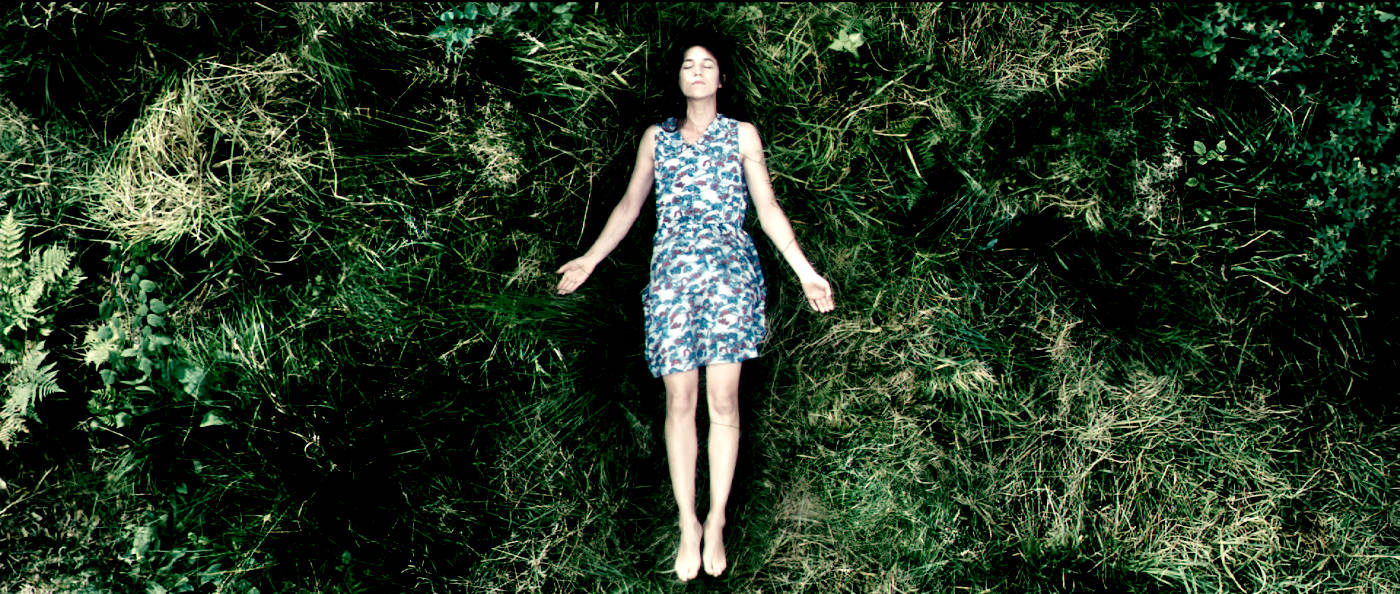
 I want to return to He's attempts to rationalise She's fear. He tells her in the early stages of the film that "grief is natural". He tries to make her realise that the things that she fears are not actually dangerous, and he does this at first by seemingly hypnotising her and making her go into Eden, lying down on the grass and "melting into the green". By doing this, he is almost forcing her to become part of the thing that she fears the most: nature. She is convinced that nature is evil, and when she is forced to be part of nature, she becomes "evil". She clearly believes in the ability of his words to become reality; this is illustrated through one of their discussions about her thesis, when She accuses him of finding her subject "glib". She admits to never having finished her thesis, saying that "all of a sudden, it was glib". If this is the logic we are to follow, it might well be that He makes his biggest fatal mistake (other than claiming, in the role play mentioned above, to be all of the things that she is afraid of...) when he tells her that "your thoughts distort reality. Not the other way around". Her thoughts, her way of seeing the world, do indeed distort and change reality for both of them.

He believes that She is suffering from anxiety, and tries to persuade her that "anxiety can't make you do something that's against your nature". In response, she certainly does her best to convince him of the true nature of, well, nature. And finally, in yet another attempt to rationalise, He tries to explain to her that "obsessions never materialise. It's a scientific fact". Ironic, then, that her obsession with gynocide influences him to put an end to it all in the specific way that he does.

(I have a feeling that I might return to this one.)