Showing posts with label Final Girl. Show all posts

Friday, 3 January 2014

Women in Horror Month – An Interview

Luckily, I am far, far from the only person preoccupied with the gender dynamics of the horror genre. I constantly discover new and different approaches that people are taking to this, in my obvious opinion, endlessly fascinating and diverse subject.

And thankfully, not all of those approaches are as abstract and theoretical as mine.

A while back, I discovered a page on Facebook called Women in Horror Recognition Month. I immidiately followed it and noticed that they were posting a lot of cool links, but I didn't really know anything about the people behind it or if there was anything more than a Facebook page (granted, I could have easily figured that last one out on my own if I hadn't been so lazy). So when the team over at the Norwegian site I write for, Filmamasoner, were putting together a series of articles, reviews and interviews for Halloween about feminist approaches to horror, Women in Horror... was one of the first things to pop into mind.

Below is the full and (practically!) unedited interview with the lovely Hannah Neurotica, the wonderful brain behind the initiative. You can tell by some of the questions (and their answers) that this was meant for an audience who might necessarily not be hugely into horror, and that it was meant to be published pre-Halloween, but everything that Hannah says is still relevant and pretty damn interesting.

Enjoy!


First of all, what is WiHM?


Women in Horror Month (WiHM) is an initiative to recognize women in all facets of the horror industry (film, visual art, writing, theatre, etc) from around the world. WiHM wouldn't exist without those who create film festivals, podcasts, blogs, donating blood, and other creative mediums to showcase women's contributions to the dark arts. Our organization helps foster and promote events, it's so exciting to what DIY events (online and on land) people develop each year in there own communities. Our goal as an organization is to assist underrepresented female genre artists in gaining opportunities, exposure, and education through altruistic events, printed material, articles, interviews, and online support. Anyone, anywhere, can take part in this celebration.

How did it all start, how did you get the idea for this project?


The idea came to me while sitting on my couch feeling frustrated and exhausted by the outcome of an interview I'd done that week with CBC radio. It was just the tipping point for me & my anger about the horror industry (well, the entertainment industry in general) continually ignoring women's contributions and treating female horror fans as an anomaly. I was upset by lack of visibility, lack of opportunities, and rampant assumptions about the relationship between women and the horror genre both as artists and consumers.

I'd been making Ax Wound: Gender & The Horror genre for years at that point and it felt like a natural progression. As they say: if you are not happy with something going on in the world, then do something, don't just complain. You don't have to lead a revolution or part the sea – just start a conversation with someone. That is a huge step. Right now is an amazing time: there are endless platforms for innovative social change. Get creative. Don't be afraid. If you are sick of being marginalized I guarantee you are not alone – you don't have to be. They key is community and supporting each other. Reach out to people. Drop your ego. Focus on the cause with genuine determination and passion – that is something others will want to be part of too.


What are your feelings about the Final Girl concept? Who is your favourite (or least favourite!) Final Girl?


Carol Clover
's book "Men, Women, and Chainsaws" was pivotal to film/gender studies discourse. Her observations inspired academics, film buffs, and eventually lead to the genre being more self-aware (mainstreaming the concept) with films like Scream, The Rise of Leslie Vernon, Cabin in the Woods, etc. So, on its own the concept/book is something I respect deeply and should be respected as a serious contribution to film theory. I even have a tattoo that says Final Grrrl on my wrists because to me, it represents overcoming odds and survival. Does that mean I think that her book was a perfect reading of slasher films with no room for further exploration? Of course not. The book is very Freudian and she openly states in the introduction that the book was written with the male spectator in mind. I would love to see her write an updated version considering the self-awareness that exists right now as well as the changes in what the Final Girl is allowed to partake in, yet still reign supreme.


I guess what I am saying is I don't get how the concept can be something one "likes" or "dislikes." It's an observation that had huge impact on the way we look at and study horror films. I think people who are turned off when they hear the word are probably just assuming that a final girl can't evolve or don't view it for what it is. She has gone from virgin to druggie – but she still remains "final." Again, all interesting things left to explore. Nancy from Nightmare on Elm Street is my favorite always. I view the Final Girl concept as an entry point of study with much more to build on.

There are genre critics who claim that the horror genre is inherently misogynist. What is your message for them?


It depends if we are talking about the horror film industry or the film characters themselves. The genre is no more misogynist then any other genre. Romantic comedies.... Need I say more? I do think horror actually has the capacity to explore social issues in a way no other genre can. As for Hollywood – there  is this rumor going around that vaginas behind cameras will bring on the apocalypse. I think we can prove them wrong, and we are making small advances, but we have a long fucking way to go. 


Nancy setting MacGyver style traps for Freddy


Do you think there is a difference in how women in general and men in general watch and enjoy horror films?

Yes, in the sense that human beings view everything in life from subjective experience; that which would be influenced by gender, sexuality, culture, socioeconomic status, life experiences. From my observations the biggest point of disconnect between genders when viewing a horror film involve the usage of graphic rape scenes. This is something one could assume would be a subject that women will have a different reaction to based on the sick statistics of violence against women being such an insidious and rampant reality. Of course this is a very general response.
Aside from viewing – I think an exciting aspect of seeing horror films that are made by women is that fresh perspective of fear that men wouldn't think to explore in certain ways because its not part of their daily reality.

Who is your favourite Woman in Horror?


I suck at pinpointing a favorite film/book/anything so a person is off the charts impossible. One of the aspects I love about WiHM is meeting so many amazing women working in a wide array of creative modalities - all with something unique to contribute that as a whole form this sense community.

So I can't say a favorite but I can say the type of women I love most are those who are not afraid to speak out, be creative, and who don't build their sense of self off unessasary competition or belittling of other women. We need to get rid of this fear that the success of one woman somehow translates to less success for us. It's quiet the opposite. There is room for all of us to reach our goals and the best way to make it happen is building each other up – something women generally speaking don't seem to be the best at in practice.

The paradigm we live in thrives on keeping women from getting along – imagine how crazy awesome shit would be if we flipped that? So a favorite woman in horror would be one who views other ladies success as a step in the right direction and not a personal attack to their own career. Off the top of my head some examples would be Jen & Sylvia Soska, Jovanka Vuckovic, Karen Lam, Jennifer Lynch....

Finally, if you could recommend three horror films for our readers, which would they be and why?


Hmm... Oh man, I can only pick three? I suck at these questions too. Okay well, most recently I have been telling my friends to check out The Bay. It is one of the best examples of how to do a found footage and still make a high quality/watchable film. I think I have watched it five times on Netflix.


Just another day in the office for American Mary


American Mary is a great one written and directed by Jen and Sylvia Soska. It's a beautifully shot dark film. Carnival of Souls (1962) – if you haven't seen that then you need to stop what your doing right now and put it on (no, actually, wait until Halloween) that would be perfect for Halloween. It's creepy as fuck. Also, if you want to watch short films, features, and trailers of films written and/or produced by women I have been working on this ongoing collection here: http://womenmakehorrorfilms.tumblr.com/

This is by no means a reflection of all that is out there. In fact, this is just a tiny miniscule example and there is more and more being added all the time. There are also some features directed by women coming out soon which I can't wait to see like Evangeline (dir. Karen Lam), DYS (dir. Maude Michaud) among many others.

A Norwegian translation of this interview can be read at Filmamasoner.no.

Friday, 19 October 2012

Wither (2012)


I don't know why, but Sweden appear to have been less keen on straight out horror films than us Norwegians for some time. Wither, a classic hiking trip gone bad tale, might well change some of that.


Wither follows a pretty traditional formula; seven young, good looking friends who are ready to party non-stop for a couple of days, seek out an abandoned house in the middle of nowhere. But the gang aren't the only ones partying, there's also some zombie-esque creatures in the basement that are about to have some fun. I say zombie-esque because, like so many other films in the zombie sub-genre, they're not traditional zombies who are a bit braindead and want to eat your brrrraaaaaaiiiins. These motherbitches won't even die from a shot to the head!

It's an entertaining film, but the story will be so well known to most of you that I'm not going to go into great detail. There is one pretty unusual twist here, though: rather than a final girl there's a final boy! That was about time, wasn't it? It looked for a while as if his girlfriend was going to step up to the part, but umm, she couldn't.

I realise that the final girls have been one of the major selling points for people like myself who are interested in both horror films and feminism or at least gender theory. But because the role of the final girl is so established by now, it's cool to see someone mixing it up a bit. It's funny too that there's an implication that it's all because he's completely pussy whipped. Classy.

Unfortunately, where Dunderland might have had one too many sub-plots to follow, in Wither it's almost the opposite. The characters are shallow and underdeveloped, the main story too well known, and any sub-plots are, well, not really there. For a movie of nearly an hour and 40 minutes it does get a bit boring after a while – not because it's not a well made zombie flick, but let's face it: there's quite a few of those by now. And when you don't have a story, even a Final Boy can't help you.

Sunday, 20 May 2012

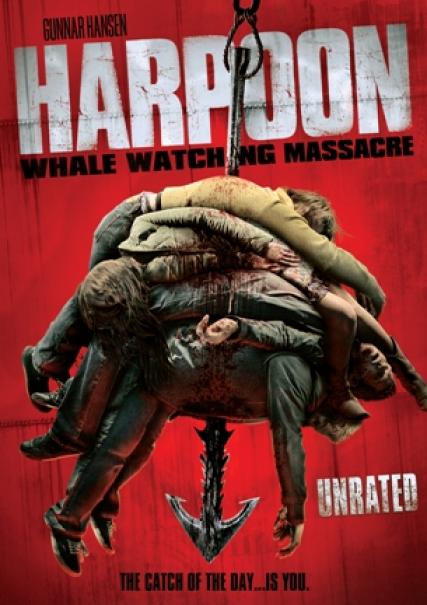
Harpoon – The Reykjavík Whale Watching Massacre (2009)

Before you read this post you should probably be aware that The Texas Chain Saw Massacre (1974) is my favourite movie of all time.


As you can see from even the namedropping in the trailer (In the tradition of The Hills Have Eyes and The Texas Chain Saw Massacre!), it's not only in its name that Harpoon: The Reykjavík Whale Watching Massacre tries to live up to Tobe Hooper's 1974 classic. Does it pull it off, you ask? Well, my introductory disclaimer might give you a hint...

Of course, I knew that there was a very, very tiny chance for this movie to actually live up to the film that still gives me goose bumps every time I watch it (not because of the scares, just because I love it so much). I still wanted to watch it, because who doesn't like a bit of trashy fun every now and again? Besides, when's the last time you saw an Icelandic slasher film? Wouldn't want to miss it.

The parallells to TCSM and all the other films that it in turn referenced or has since been referenced by, start early. The hopeful group of whale watchers have hardly left shore before we the viewers are introduced to a highly dysnfunctional family sitting around a table for a meal. The family consists of Mamma (mum), Tryggvi and Siggi. The latter is what you might call a bit simple, and also fairly effeminate – at least when compared to the rough, manly man Tryggvi. Siggi even has one hand with long, painted fingernails and rings on his fingers, which instantly made me think of Buffalo Bill, who might be referred to as a younger (and sexualised) cousin of Leatherface.

This family, just like Leatherface and his family, have been robbed of their livelihood as "professional killers" in the meat industry, only here it's whales instead of cows. Change doesn't appear to come easily to either family, and they start killing people instead. While the Sawyers (as we learn is the name of the TCSM in the sequel) seem to be murdering for cannibalistic purposes, in that they turn their victims into tasty barbeque, it remains unclear what their distant Icelandic relatives want to achieve by murdering people. Other than for their idea of fun, I mean.

The mother figure in Harpoon doesn't appear to be a whole lot older than her "sons". This might hint at some sort of incestuous relations, or a "family" whose bonds consist more of their unability to function in the real world than of the bonds of genetics and blood that most families are made up of. In any case, this type of familial ambiguity is fairly common within the slasher genre. Throughout the original TCSM movie it remains unclear what the relationship is between Leatherface, Hitchhiker and the character only credited as "Old Man"; in the sequel he is revealed to be their uncle, and is referred to as The Cook. Going even further back, there is always a sense of unease surrounding the familial ties in the Bates family in the classic proto-slasher. (If you're interested in finding out more about the role of the dysfunctional family in horror films, you might want to look up Tony William's essay Trying to Survive on the Darker Side: 1980s Family Horror.)

Another similarity can be seen in scenes where the victims of this freaky family think that they have reached safety and let their guards down a little bit, before discovering how fatally wrong they were. The first time this happens is when Tryggvi apparently comes to their aid in his fishing boat after the captain on the whale watching cruise has died (in an accident). Of course, we know that Tryggvi should not be trusted as we have already been introduced to him, however briefly; but the passengers on the boat and his soon to be victims, have little more than a weird feeling that there is something just a bit off about this man. They begin to realise what is happening once they're brought aboard the family's ship and home, and witness a noteworthy first kill by all round weirdo Siggi:


The second time this kind of scenario is employed is much later in the film, and made me instantly think of TCSM and Sally's escape to the nearby gas station and the following realisation that she has not escaped at all. This is when Endo, granddaughter of a "real kamikaze" and spectacular final girl material, escapes off the ship of horror in a smaller boat with the drunken French on board. They make it to a nearby lighthouse and are invited in for tea (!). Endo sees pictures on the wall of the family from which she has just escaped, and realises how wrong she was to relax. By way of superb manipulative skills, Endo makes it out of there and back home safe and sound, but she is the only one out of the three.

As with Sally, there is a certain sense of confusion regarding what Siggi wants to do with his new plaything, Annette (seen singing in the youtube trailer above). At first I assumed he wanted to keep her as a mate; but after he has her tied up by the hands and drenched in something that might well be blood, he mutters to Tryggvi something about a sacrifice of some sort. Although Siggi is repeatedly referred to as "the ladies' man", he, like Leatherface, seems devoid of any sort of sexual interest in his victim.

Whether the casting of a black man as the sole male protagonist is a conscious pointer to Night of the Living Dead or not is unclear, but it certainly is enough of a rarity in this genre that it is not entirely unlikely. Fitting, then, that Leon seems to inhabit much of the same overbearing or outright patronising attitude towards women ("Make yourself useful!") that you might have expected more from someone in the 1960s. If could be as a comment to this that the filmmakers have decided that he is gay – then again, it could just as well be to see the disgusted look on Marie-Anne's face when she realises Leon actually has no romantic interest in her after all. Interesing how a man's lack of interest in a woman seems to be represented as such an unspeakable horror that it is a regular feature in so many slasher films...


I mentioned above how Endo is great final girl material. I still don't feel that she ever quite reaches that status – despite being the sole survivor of the massacre, after Marie-Anne is finally done in by one of the "fascinating" and "majestic" whales she and everyone else had set out to get a glimpse of in the first place. (Should you ever end up in a liferaft, take a minute to acquaint yourself with its most basic features before trying to do tricks with it, ok?) Maybe it is because Endo herself is never directly involved in any of the terrors and physical abuse. What makes a final girl a Final Girl, is that she has been through those horrible things, put on a fight and lived to tell the tale, right? Endo is the first one to put up a fight though, so that she never even gets in a position like Sally or Laurie or Nancy. So maybe, with the evolution of the final girl in mind, cunning little Endo is the next generation? She gets a sweet payback on her hopeless employers as well, stealing their identity and money once she has escaped the massacre. You go, girl.

Wednesday, 20 October 2010

Death of the Final Girl

In case you hadn't noticed, I'm really quite fond of Ellen Ripley, and the first Alien film in particular. Another thing that you might have noticed is that I love discussing the Final Girl concept. But one thing I haven't yet mentioned is my (relatively) newfound love for the Norwegian horror/slasher franchise Cold Prey. And within the space of one week I have watched the last, and allegedly final instalment of the Cold Prey series and Alien: Resurrection (1997), so what could be more natural than to take some time to discuss the role of the Final Girl in these two films?


First of all though, a bit of background on the Cold Prey series. The first two films are traditional "make one film, then a sequel" stuff: the second film follows right where the first one left off, so it hasn't moved far in time or geographically speaking, and the Final Girl from the first film relives the nightmare in the sequel. But where the original is bleak and slightly Shining-esque (with more blood and screaming), the sequel is more purely slasher-action, and so many purists and occasional horror watchers uphold the original as the better of the two. I think they complete each other and I've only watched them in one go which works perfectly. The Final Girl in these two films, Jannicke, is what really makes them work so well. She is actually very sympathetic, as opposed to hordes of other Final Girls. She is clever (medical student), beautiful, caring, strong in every sense of the word, but most of all she is thoroughly human.


Jannicke always reminded me of Ripley, in more than one way. Maybe it is fitting, then, that in both CP3 and A:R the Final Girls are changed. CP3 is a prequel – different actress, different story, different character (even though it is a prequel, I will still treat it as what it is: the last of three films). Sure Sigourney Weaver still plays "Ripley" in A:R, but it isn't really Ripley. It is her clone. Her 8th clone, to be precise. How much needs to be said about the earlier clones, in this context? Not necessarily much. If No. 8 is seen as embodiment of the ideal Final Girl (physically strong; maintaining a cool, ironic distance to what is happening around her; complex knowledge of her enemy, to which she is yet strangely drawn; much smarter than everyone surrounding her, etc.) then clones 1-7 are what have gone before her. Failed experiments; the clones are either too much like an alien and too little like a human, or too much like a little baby and not enough like a grown creature. The last of the previous clones even begs No. 8 to kill her. Clones 1-7 are outdated, imperfect representations of Final Girls. They are Sally, Nancy, Laurie, Stretch, Alice and all of the others.

The Final Girl in CP3, Hedda, is mostly just annoying. But she possesses some of the ideal Final Girl skills or characteristics as lined out by No. 8 in A:R: she understands more than anyone else, she can endure more and accomplish more, she can run for longer and hide better, she can keep others (barely) alive, she doesn't think twice about pulling the head of an arrow out through her boyfriend's shoulder when she is convinced that it will save him, or indeed about setting fire to a house in which she and her boyfriend are hiding from the killer as long as she is convinced that the fire will kill the Big Bad and they will be able to escape. She finds her kidnapped and tortured friends and attempts to save them. She's a bit like a female MacGyver, which in itself is not a bad thing, but not really something that belongs in a horror movie. It isn't something that brings the audience to the edge of their seats in the same way as a normal girl with more human characteristics might have. It has been said many times by several critics that the killers in these films are not (entirely) human, and it looks as if the Final Girls are trying to catch up. No. 8's very blood is of a superhuman nature, and it is stressed again and again how she is not like us. But where does that lead us? Two creatures with superhuman powers and a lack of human trademarks such as doubt, regret, empathy, forever locked in an impossible battle where no one can win and no one can die? Has the evolution of the Final Girl, which was praised by many when it moved on from Sally (passive resistance) to Laurie (active resistance) to Nancy (actively seeking the killer to set things right), been allowed to run on for too long, and spiral out of control? If she is not someone that we the audience can identify with and feel for and root for, is there any point to her at all?


Of course, Hedda's status as a Final Girl could easily be up for discussion. She does after all die, which is more or less the one thing that a Final Girl just doesn't do. But you see, she isn't killed by The Killer, rather she is accidentally shot by a policeman who thinks she's trying to shoot him. Anyway, the point is she isn't one of the victims of the actual killer, strictly speaking; so in my book she still counts as Final Girl. Besides, Ripley dies as well, remember? She is not directly killed by one of the aliens, but kills herself and it in the process. So they both die because of their enemies, but not by their hand. It is far more human instincts that get them both killed in the end, and we're back to human vs. superhuman.


So I guess my main point is this: the Final Girl needs to be human. She can't be someone who is "better" than us, or the whole point of her disappears. The original Final Girls are completely normal (and maybe not even sympathetic or likeable, because many humans aren't) and that's why it is exciting to see what happens to them and how they make it through so many horrible incidents. It is why we can identify, and it is ultimately what makes a horror film into what it is: a scary movie.

PS: I was going to discuss how in A:R they have a "Father" whereas in Alien they have a "Mother", but I couldn't really think of anything interesting to say that wouldn't have been horribly longwinded. Any thoughts on this, or anything else, feel free to leave a comment below.

Sunday, 26 September 2010

John McClane – a Final Girl?

Consider the following statement:

"If you replace the lead of any horror movie, with a badass, it becomes an action movie".

It's an interesting thought that certainly opens up for some useful ways of looking at things, but I remain unconvinced that it's actually the case. And now I'm going to tell you why.

I'm assuming here that "the lead" means the Final Girl, the one who survives after seeing all of her friends being killed off one by one, and who (understandably) tends to end up a lot less sane at the end of it – having been tortured and chased for (what feels like) the better part of the film.

Firstly, there is the fact that the action hero, here represented by none other than John McClane, often doesn't seem to be as much trapped in the situation as the girls in the slasher films. Sure, they're very much involved in the situation and it's not as if McClane can just walk out of his skyscraper any time he wants, but he is granted the freedom to distance himself a bit from the actual core of the situation, he can retire into an air vent or something and consider his options. Not very glamourous perhaps, but I'm sure you'll agree it sounds better than being tied to a chair by Leatherface's dinner table, or being stuck in wardrobe waiting for Mike Myers to attack. The Final Girl is hurled right into the centre of the most absurd situations, which they rarely, if ever, really know the full extent of in the way that McClane does.


And what is it that gives McClane a lot of his relative freedom? He's trained. He's been in similar situations before, and has some idea of how to deal with it. He has the physical strength that is required, and of course, he has weapons (as easy as it would be to get all Freudian on this point, I'm going to resist, take note please). But wait, surely this sounds familiar even in a horror context? Of course it does, you've seen Aliens haven't you? If we pretend for a moment that it's possible to see past the things that I brought up in my previous post about Aliens, and the fact that it's full of aliens, then this describes the 1986 version of Ripley perfectly. Which makes Aliens more of an action flick than a horror film. Whaddayaknow.

Meanwhile, back in the skyscraper, McClane is busy not only hiding from/killing the European terrorists, he's cracking jokes while he's doing it! What a man. So his ability to distance himself from things is not only about the physical distance, but it's also the ironic distance. He is allowed to have some sense of fun in the midst of it all.


If we keep Derrida and his crazy theories in mind from the previous post, it can easily be argued that the action hero seems somehow aware that there is an audience. We are watching him, he's aware of it, he talks as if to himself in order to further entertain us. And this can create some sort of sense of being equal – John knows what's going on just as much as we do. This is never, ever the case with the Final Girl in the conventional slasher films. It is not us watching her and following her around, it's the killer. Again, she does not know the extent of the situation. If anything, the joke is on her.

Finally, there's the unavoidable fact that both the action film and the slasher traditionally belong to genres that are made for men and by men. Of course they'd like to see themselves as the big, strong, handsome and even funny guy who can take out entire international terror organistations on their own. This image will only be further enhanced if they can see the woman as someone who is completely weak and meek and entirely helpless without them.

Or was that helpless against them? Hmm.

Saturday, 21 August 2010

Stay away from her, you bitch!

Having fallen instantly and absolutely in love with Alien (1979) upon first watching it about a year ago, I was pretty excited to move on to the sequels when I found them all in one handy little box set. Especially the first sequel, Aliens (1986), was something that had me quite excited as I had encountered so many people listing it as one of their favourite films, ranking it higher even than the first film.


Since actually having watched it and made some throwaway remarks about it online though, I've realised just how divided opinions really are on this. The people who prefer the 1986 sequel are, like the film itself, louder and more in your face. In a sense I think that Aliens follows more of the kind of self-referential slasher mentality or even tradition that I mostly love, despite it being seen as wankery by a lot of people. But its predecessor has that other thing that I generally value above most other things in a horror/slasher flick: some degree of subtlety. To me, Ripley calling the egg laying alien a "bitch" is too much like the A-Team remake of 2010 in which Face is suddenly a loud and crude character who goes around calling people motherfuckers. It's uncalled for, it adds nothing to the film (apart from the occasional giggle from someone or other in the audience) and more than anything, it seems a bit stupid. Granted none of this is as bad as the Texas Chainsaw sequel, but I'll have to get back to you on that one later.


The main issue with Aliens though is, not surprisingly, Ripley herself. In 1979 she was cool as fuck because she didn't live up to the final girl stereotype (although obviously still very much filling the role). I'm not going to go into here if I think that the reason for that, ie. that Ripley was written as a man originally, is a Good Thing or a Bad Thing but it certainly made things a bit more interesting. The Ripley of 1986 however tries her very best to make up for that. Sod the fucking cat, bring a real life kid in and force that maternal instinct out until there's not much else left of her, and just in case the point should still be lost on some, land her right in the middle of a good old bitch fight with that alien queen bee. WOMAN WOMAN WOMAN.

I'm betting that Carol Clover with her whole theory of fluid/shifting identifacations in horror audiences will have had something clever to say about this, but for now I have no fancy quotes to round this off. In fact I have nothing at all to round it off, apart from something like "sequels, eh? what a load of shit."