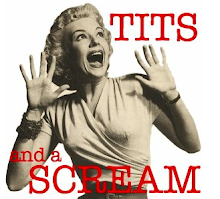
In case you hadn't noticed, I'm really quite fond of Ellen Ripley, and the first Alien film in particular. Another thing that you might have noticed is that I love discussing the Final Girl concept. But one thing I haven't yet mentioned is my (relatively) newfound love for the Norwegian horror/slasher franchise Cold Prey. And within the space of one week I have watched the last, and allegedly final instalment of the Cold Prey series and Alien: Resurrection (1997), so what could be more natural than to take some time to discuss the role of the Final Girl in these two films?
First of all though, a bit of background on the Cold Prey series. The first two films are traditional "make one film, then a sequel" stuff: the second film follows right where the first one left off, so it hasn't moved far in time or geographically speaking, and the Final Girl from the first film relives the nightmare in the sequel. But where the original is bleak and slightly Shining-esque (with more blood and screaming), the sequel is more purely slasher-action, and so many purists and occasional horror watchers uphold the original as the better of the two. I think they complete each other and I've only watched them in one go which works perfectly. The Final Girl in these two films, Jannicke, is what really makes them work so well. She is actually very sympathetic, as opposed to hordes of other Final Girls. She is clever (medical student), beautiful, caring, strong in every sense of the word, but most of all she is thoroughly human.
Jannicke always reminded me of Ripley, in more than one way. Maybe it is fitting, then, that in both CP3 and A:R the Final Girls are changed. CP3 is a prequel – different actress, different story, different character (even though it is a prequel, I will still treat it as what it is: the last of three films). Sure Sigourney Weaver still plays "Ripley" in A:R, but it isn't really Ripley. It is her clone. Her 8th clone, to be precise. How much needs to be said about the earlier clones, in this context? Not necessarily much. If No. 8 is seen as embodiment of the ideal Final Girl (physically strong; maintaining a cool, ironic distance to what is happening around her; complex knowledge of her enemy, to which she is yet strangely drawn; much smarter than everyone surrounding her, etc.) then clones 1-7 are what have gone before her. Failed experiments; the clones are either too much like an alien and too little like a human, or too much like a little baby and not enough like a grown creature. The last of the previous clones even begs No. 8 to kill her. Clones 1-7 are outdated, imperfect representations of Final Girls. They are Sally, Nancy, Laurie, Stretch, Alice and all of the others.
The Final Girl in CP3, Hedda, is mostly just annoying. But she possesses some of the ideal Final Girl skills or characteristics as lined out by No. 8 in A:R: she understands more than anyone else, she can endure more and accomplish more, she can run for longer and hide better, she can keep others (barely) alive, she doesn't think twice about pulling the head of an arrow out through her boyfriend's shoulder when she is convinced that it will save him, or indeed about setting fire to a house in which she and her boyfriend are hiding from the killer as long as she is convinced that the fire will kill the Big Bad and they will be able to escape. She finds her kidnapped and tortured friends and attempts to save them. She's a bit like a female MacGyver, which in itself is not a bad thing, but not really something that belongs in a horror movie. It isn't something that brings the audience to the edge of their seats in the same way as a normal girl with more human characteristics might have. It has been said many times by several critics that the killers in these films are not (entirely) human, and it looks as if the Final Girls are trying to catch up. No. 8's very blood is of a superhuman nature, and it is stressed again and again how she is not like us. But where does that lead us? Two creatures with superhuman powers and a lack of human trademarks such as doubt, regret, empathy, forever locked in an impossible battle where no one can win and no one can die? Has the evolution of the Final Girl, which was praised by many when it moved on from Sally (passive resistance) to Laurie (active resistance) to Nancy (actively seeking the killer to set things right), been allowed to run on for too long, and spiral out of control? If she is not someone that we the audience can identify with and feel for and root for, is there any point to her at all?
Of course, Hedda's status as a Final Girl could easily be up for discussion. She does after all die, which is more or less the one thing that a Final Girl just doesn't do. But you see, she isn't killed by The Killer, rather she is accidentally shot by a policeman who thinks she's trying to shoot him. Anyway, the point is she isn't one of the victims of the actual killer, strictly speaking; so in my book she still counts as Final Girl. Besides, Ripley dies as well, remember? She is not directly killed by one of the aliens, but kills herself and it in the process. So they both die because of their enemies, but not by their hand. It is far more human instincts that get them both killed in the end, and we're back to human vs. superhuman.
So I guess my main point is this: the Final Girl needs to be human. She can't be someone who is "better" than us, or the whole point of her disappears. The original Final Girls are completely normal (and maybe not even sympathetic or likeable, because many humans aren't) and that's why it is exciting to see what happens to them and how they make it through so many horrible incidents. It is why we can identify, and it is ultimately what makes a horror film into what it is: a scary movie.
PS: I was going to discuss how in A:R they have a "Father" whereas in Alien they have a "Mother", but I couldn't really think of anything interesting to say that wouldn't have been horribly longwinded. Any thoughts on this, or anything else, feel free to leave a comment below.
Showing posts with label Ripley. Show all posts
Wednesday, 20 October 2010
Death of the Final Girl
Labels:
Alien,
Alien: Resurrection,
Cold Prey,
Cold Prey 3,
Final Girl,
No. 8,
Ripley,
superhuman
Sunday, 26 September 2010
John McClane – a Final Girl?
Consider the following statement:
"If you replace the lead of any horror movie, with a badass, it becomes an action movie".
It's an interesting thought that certainly opens up for some useful ways of looking at things, but I remain unconvinced that it's actually the case. And now I'm going to tell you why.
I'm assuming here that "the lead" means the Final Girl, the one who survives after seeing all of her friends being killed off one by one, and who (understandably) tends to end up a lot less sane at the end of it – having been tortured and chased for (what feels like) the better part of the film.
Firstly, there is the fact that the action hero, here represented by none other than John McClane, often doesn't seem to be as much trapped in the situation as the girls in the slasher films. Sure, they're very much involved in the situation and it's not as if McClane can just walk out of his skyscraper any time he wants, but he is granted the freedom to distance himself a bit from the actual core of the situation, he can retire into an air vent or something and consider his options. Not very glamourous perhaps, but I'm sure you'll agree it sounds better than being tied to a chair by Leatherface's dinner table, or being stuck in wardrobe waiting for Mike Myers to attack. The Final Girl is hurled right into the centre of the most absurd situations, which they rarely, if ever, really know the full extent of in the way that McClane does.
And what is it that gives McClane a lot of his relative freedom? He's trained. He's been in similar situations before, and has some idea of how to deal with it. He has the physical strength that is required, and of course, he has weapons (as easy as it would be to get all Freudian on this point, I'm going to resist, take note please). But wait, surely this sounds familiar even in a horror context? Of course it does, you've seen Aliens haven't you? If we pretend for a moment that it's possible to see past the things that I brought up in my previous post about Aliens, and the fact that it's full of aliens, then this describes the 1986 version of Ripley perfectly. Which makes Aliens more of an action flick than a horror film. Whaddayaknow.
Meanwhile, back in the skyscraper, McClane is busy not only hiding from/killing the European terrorists, he's cracking jokes while he's doing it! What a man. So his ability to distance himself from things is not only about the physical distance, but it's also the ironic distance. He is allowed to have some sense of fun in the midst of it all.
If we keep Derrida and his crazy theories in mind from the previous post, it can easily be argued that the action hero seems somehow aware that there is an audience. We are watching him, he's aware of it, he talks as if to himself in order to further entertain us. And this can create some sort of sense of being equal – John knows what's going on just as much as we do. This is never, ever the case with the Final Girl in the conventional slasher films. It is not us watching her and following her around, it's the killer. Again, she does not know the extent of the situation. If anything, the joke is on her.
Finally, there's the unavoidable fact that both the action film and the slasher traditionally belong to genres that are made for men and by men. Of course they'd like to see themselves as the big, strong, handsome and even funny guy who can take out entire international terror organistations on their own. This image will only be further enhanced if they can see the woman as someone who is completely weak and meek and entirely helpless without them.
Or was that helpless against them? Hmm.
"If you replace the lead of any horror movie, with a badass, it becomes an action movie".
It's an interesting thought that certainly opens up for some useful ways of looking at things, but I remain unconvinced that it's actually the case. And now I'm going to tell you why.
I'm assuming here that "the lead" means the Final Girl, the one who survives after seeing all of her friends being killed off one by one, and who (understandably) tends to end up a lot less sane at the end of it – having been tortured and chased for (what feels like) the better part of the film.
Firstly, there is the fact that the action hero, here represented by none other than John McClane, often doesn't seem to be as much trapped in the situation as the girls in the slasher films. Sure, they're very much involved in the situation and it's not as if McClane can just walk out of his skyscraper any time he wants, but he is granted the freedom to distance himself a bit from the actual core of the situation, he can retire into an air vent or something and consider his options. Not very glamourous perhaps, but I'm sure you'll agree it sounds better than being tied to a chair by Leatherface's dinner table, or being stuck in wardrobe waiting for Mike Myers to attack. The Final Girl is hurled right into the centre of the most absurd situations, which they rarely, if ever, really know the full extent of in the way that McClane does.
And what is it that gives McClane a lot of his relative freedom? He's trained. He's been in similar situations before, and has some idea of how to deal with it. He has the physical strength that is required, and of course, he has weapons (as easy as it would be to get all Freudian on this point, I'm going to resist, take note please). But wait, surely this sounds familiar even in a horror context? Of course it does, you've seen Aliens haven't you? If we pretend for a moment that it's possible to see past the things that I brought up in my previous post about Aliens, and the fact that it's full of aliens, then this describes the 1986 version of Ripley perfectly. Which makes Aliens more of an action flick than a horror film. Whaddayaknow.
Meanwhile, back in the skyscraper, McClane is busy not only hiding from/killing the European terrorists, he's cracking jokes while he's doing it! What a man. So his ability to distance himself from things is not only about the physical distance, but it's also the ironic distance. He is allowed to have some sense of fun in the midst of it all.
If we keep Derrida and his crazy theories in mind from the previous post, it can easily be argued that the action hero seems somehow aware that there is an audience. We are watching him, he's aware of it, he talks as if to himself in order to further entertain us. And this can create some sort of sense of being equal – John knows what's going on just as much as we do. This is never, ever the case with the Final Girl in the conventional slasher films. It is not us watching her and following her around, it's the killer. Again, she does not know the extent of the situation. If anything, the joke is on her.
Finally, there's the unavoidable fact that both the action film and the slasher traditionally belong to genres that are made for men and by men. Of course they'd like to see themselves as the big, strong, handsome and even funny guy who can take out entire international terror organistations on their own. This image will only be further enhanced if they can see the woman as someone who is completely weak and meek and entirely helpless without them.
Or was that helpless against them? Hmm.
Labels:
action heroes,
Aliens,
Die Hard,
Final Girl,
John McClane,
Ripley
Saturday, 21 August 2010
Stay away from her, you bitch!
Having fallen instantly and absolutely in love with Alien (1979) upon first watching it about a year ago, I was pretty excited to move on to the sequels when I found them all in one handy little box set. Especially the first sequel, Aliens (1986), was something that had me quite excited as I had encountered so many people listing it as one of their favourite films, ranking it higher even than the first film.
Since actually having watched it and made some throwaway remarks about it online though, I've realised just how divided opinions really are on this. The people who prefer the 1986 sequel are, like the film itself, louder and more in your face. In a sense I think that Aliens follows more of the kind of self-referential slasher mentality or even tradition that I mostly love, despite it being seen as wankery by a lot of people. But its predecessor has that other thing that I generally value above most other things in a horror/slasher flick: some degree of subtlety. To me, Ripley calling the egg laying alien a "bitch" is too much like the A-Team remake of 2010 in which Face is suddenly a loud and crude character who goes around calling people motherfuckers. It's uncalled for, it adds nothing to the film (apart from the occasional giggle from someone or other in the audience) and more than anything, it seems a bit stupid. Granted none of this is as bad as the Texas Chainsaw sequel, but I'll have to get back to you on that one later.

The main issue with Aliens though is, not surprisingly, Ripley herself. In 1979 she was cool as fuck because she didn't live up to the final girl stereotype (although obviously still very much filling the role). I'm not going to go into here if I think that the reason for that, ie. that Ripley was written as a man originally, is a Good Thing or a Bad Thing but it certainly made things a bit more interesting. The Ripley of 1986 however tries her very best to make up for that. Sod the fucking cat, bring a real life kid in and force that maternal instinct out until there's not much else left of her, and just in case the point should still be lost on some, land her right in the middle of a good old bitch fight with that alien queen bee. WOMAN WOMAN WOMAN.
I'm betting that Carol Clover with her whole theory of fluid/shifting identifacations in horror audiences will have had something clever to say about this, but for now I have no fancy quotes to round this off. In fact I have nothing at all to round it off, apart from something like "sequels, eh? what a load of shit."
Since actually having watched it and made some throwaway remarks about it online though, I've realised just how divided opinions really are on this. The people who prefer the 1986 sequel are, like the film itself, louder and more in your face. In a sense I think that Aliens follows more of the kind of self-referential slasher mentality or even tradition that I mostly love, despite it being seen as wankery by a lot of people. But its predecessor has that other thing that I generally value above most other things in a horror/slasher flick: some degree of subtlety. To me, Ripley calling the egg laying alien a "bitch" is too much like the A-Team remake of 2010 in which Face is suddenly a loud and crude character who goes around calling people motherfuckers. It's uncalled for, it adds nothing to the film (apart from the occasional giggle from someone or other in the audience) and more than anything, it seems a bit stupid. Granted none of this is as bad as the Texas Chainsaw sequel, but I'll have to get back to you on that one later.
The main issue with Aliens though is, not surprisingly, Ripley herself. In 1979 she was cool as fuck because she didn't live up to the final girl stereotype (although obviously still very much filling the role). I'm not going to go into here if I think that the reason for that, ie. that Ripley was written as a man originally, is a Good Thing or a Bad Thing but it certainly made things a bit more interesting. The Ripley of 1986 however tries her very best to make up for that. Sod the fucking cat, bring a real life kid in and force that maternal instinct out until there's not much else left of her, and just in case the point should still be lost on some, land her right in the middle of a good old bitch fight with that alien queen bee. WOMAN WOMAN WOMAN.
I'm betting that Carol Clover with her whole theory of fluid/shifting identifacations in horror audiences will have had something clever to say about this, but for now I have no fancy quotes to round this off. In fact I have nothing at all to round it off, apart from something like "sequels, eh? what a load of shit."
Labels:
Alien,
Aliens,
Final Girl,
Ripley,
the A-team
Subscribe to:
Posts (Atom)