Saturday, 7 May 2011

From revenge to rape, and back again. Part 1

This post has been a long time coming. And not only because it's a long time since I've posted anything. I've been trying to make sense of the rape-revenge sub-genre ever since I was introduced to it (once again, credit goes to Carol Clover). Maybe not even so much the genre or the movies themselves but something to say about them. Can anything sensible be said, that isn't already said elsewhere?

For those not familiar with the phenomenon: a rape-revenge film is exactly what it sounds like. A person (typically a woman... I'm not aware of any examples where a man is the victim. If you know of any, please comment below) is raped brutally, seemingly unprovoked. She is then left for dead or at least assumed unwilling or unable to do anything about the situation. Her hatred builds up and drives her to perform hideous acts of revenge. Sometimes, the person executing the revenge is not the victim herself but rather someone close to her (especially, of course, in the cases where the victim is actually killed), such as a boyfriend or parents. The rapist(s) is often killed. There are variations, as you will soon enough see, but that is the standard outline.


Not strictly speaking the first of its kind, I Spit On Your Grave (1978) has certainly come to be the defining movie of this bizarre sub-genre.


There was a remake of this film released last year. In 2009, there was a Norwegian rape-revenge film called Hora ('The Whore'), which made all sorts of claims about being the first Norwegian grindhouse film and other things besides, and as far as I am aware it never said anything about being a remake. It was, though. This made me think, again, about what this genre actually is. Can it even be said to be an actual genre, a type of film, or is it just basically one film and endless remakes and variations?

In this post I will try to provide you with a kind of history of the evolution of the rape-revenge film. In some cases, it will be debatable whether the films I'm talking about are actually rape-revenge films at all. Debate away! I've mainly just picked films that help to illustrate my point. Which is hinted at in the title of this post.

Ready? Let's go!

For many reasons, the brutal visual representations of rape have not been around for many decades. Censorship rules and standards of what might be socially acceptable have, as you might be aware, not always been the same as they are today. Movies have always included stories more or less about sex though, and women scorn, and bitter, hateful vengeance. Look, if you will, to the 1958 classic Attack of the 50ft Woman:

When an abused wife grows to giant size because of an alien encounter and an aborted murder attempt, she goes after cheating husband with revenge on her mind.
Here, the theme of female revenge over a male object is brought into horror, and even sci-fi, terrain. Granted there is no hint at an actual rape, I'm sure you could interpret a rape into it if you really wanted: maybe the alien raped Mrs. Archer? Maybe it was a forced marriage that could on some level be likened to rape? Maybe it was just what is popularly referred to as "emotional rape"? Who knows. The revenge motif is clear, and we're talking a real physical type of revenge.


By 1972, things were naturally different. For a start, Wes Craven was in business. And in The Last House on the Left, he is introducing one of his favourite themes: teenagers rebelling against their parents. With added rapists.

Two girls get raped in this film, and the representation of the two rapes are quite different. The first rape is that of the tougher girl, Phyllis, and is not very graphic at all. You hear some noises and Phyllis telling them to 'stop it', but overall it almost seems as if it was a far worse experience for her when she was forced to 'piss her pants'. The rape of her more innocent friend Mari is far more exhausting on the viewer, and the experience of being raped is here pretty much likened to death. Mari is being stabbed in the chest almost while she is being raped (but I think the stabbing takes place just after the other kind of penetration), blood spurts out, she screams and cries and begs for her life. After being raped, Mari gets up, covers herself up and walks into a lake. She is then shot. It seems almost that death is the only possible consequence of being raped.

It is Mari's parents who punish the brutal gang for their crimes after they realise she has been killed. Maybe this is another "mother and father know best" kind of thing? Coming from Craven though, that would be a bit strange (see: A Nightmare on Elm Street (1984), The Hills Have Eyes (1977), The People Under the Stairs (1991), the Scream films, etc.). Interestingly (though a bit of an aside), one of the men repsonsible for Mari and Phyllis' rapes and deaths, dreams of Mari's parents taking out his teeth. Apparently this can represent 'a fear of rejection [or] sexual impotence', or a loss of 'childhood innocence'.


Although Jennifer in ISOYG is the victim of that film as well as the avenger, she certainly has common traits with Mari's mother. As opposed to Mari, they are both fully adult women, who do not hesitate to use sex as a way of getting back at the ones who have somehow hurt them. In both films, the men do not seem to have any doubts about the legitimacy of the women's approaches – maybe believing themselves to be that irresistable, or in Jennifer's case that they have somehow changed her mind about them; that deep down, she must have enjoyed the rape(s).

I realise I have not really paid much attention to the rape scenes themselves. If you have not seen these films you will just have to take my word for it: they are there, and they are quite graphic. Indeed, 'the length of the rape sequence, the prolonged physical and mental anguish suffered by the victim' were among the reasons why ISOYG was originally refused classification. (Here is a link to the Video Nasties documentary.)

In order to prevent this post from getting so long that no one will want to read the whole thing, I will pause here and get back to you with a part 2 within a couple of days. There will be quite a leap in time in terms of films being discussed as well, so this is a good place to take a break.

Oh, and while we're all here: it is now possible to be become a fan of Tits And a Scream on Facebook! I set it up so that I can share funny links and film clips and stuff, and still keep this blog as "clean" as possible. See you there, guys n gals.

Friday, 25 March 2011

Norwegian Ninja

Hello dear readers (or those of you who have randomly stumbled upon this site whilst searching for pictures of alien tits etc),

1) I've written a thing about Norwegian Ninja for the hub site over at Cult Labs. Not only should you read my post (obviously), but you should definitely have a look around the site and the forums as well, it's a cool place. Norwegian Ninja will be out on DVD on April 18.
 (PS: It took me a while to spot the pretty subtle scroller (is that an actual word?), but it is there, just on the right hand side of the top blog post – scroll down for plenty more, including the post signed by yours truly)

2) I will actually update this blog soon as well – I've got a SMASHING post about the evolution of rape-revenge films up my, umm, sleeve. Until then, have a good weekend, and remember, kids: It's only a movie.


Tuesday, 4 January 2011

Highlights from the search keywords section

I absolutely love being able to see what people are actually searching for when they stumble upon my blog. Some people do actually search for relevant things, but here's a small selection of my personal favourites:

- looking through titts
- alien tits
- girl with three tits
- charlotte gainsbourg castrates herself video
- final girls tits
- lovemaking
- gary gilmore titties

Granted, none of these are very surprising... They all brought a smile to my face, though!

Keep up the good work, everyone.

Wednesday, 24 November 2010

Antichrist and the Nature of Horror

"the feminine is not a monstrous sign per se; rather, it is constructed as such within a patriarchal discourse"
Barbara Creed

As you will no doubt be aware, Lars von Trier's 2009 flirt with horror, Antichrist, found itself at the centre of quite a lot of controversy upon its release. At the core of the debates surrounding the film has been the question of misogyny: is the film as misogynistic as many critics seemed to believe, or is it "actually" just one big feminist statement? The minds of the public will probably never be made up about this, and both sides seem to have little trouble arguing a strong case with proof  taken exclusively from the movie itself. While I am normally all for a gender centric analysis of horror films, it seems to me that maybe this is missing the point a bit in the case of Antichrist: when it is so obviously quite possible to to make such strong arguments on both sides, couldn't this be a sign that the whole excercise might be just a bit pointless? By all means, I'm a big fan of using movies to make a point of some sort; but this is a film that can basically "mean" anything that you might want it to. However, there's no real getting around the fact that there is a lot of talk about fear in the film. The main topic of discussion is what makes the nameless female played by Charlotte Gainsbourg, afraid – or what makes people, in general, afraid. Nature is being named as one source of horror and to me, it deals quite explicitly with the very nature of horror.


 The link between nature and horror is hardly something new. Linking sex and nature with horror likewise. One scene that popped to mind whilst watching Antichrist was from The Evil Dead (1981). You know the one, when the girl walks off into the forest at night and the forest itself literally rapes her. I won't pay any particular attention to potential rape motifs in Antichrist in this post (although I will return briefly to the Freudian aspects of it a bit later on), mainly because there are just too many and it would take up too much space in a post that is about something different. But I thought that specific scene was worth mentioning anyway. For example in relation to Charlotte Gainsbourg masturbating furiously in the forest, then being joined by her husband who gives her a good slapping.

With this film, Lars von Trier seems to bring the sex back into the world of horror. Because in recent years, it has become less and less essential to the horror genre, as far as I can tell. It is now mostly about the torture, as discussed in my previous post, and the focus has been removed almost entirely from the sex which was always a major source of horror in the past. Look at Psycho: you don't witness any sex acts actually taking place on screen, yet still the entire film is absolutely chock-full of it. Marion and Sam get dressed in the hotel room; you see Marion in her underwear several times and obviously naked in the shower; Norman was aroused by Marion (according to the psychiatrist in the final scene), etc etc etc. Now, even something like Hard Candy (2005), which is in its own way all about sex, doesn't show any actual sex take place. In Antichrist though, there is LOTS of it, and it is very detailed. As anyone with even the vaguest interest in traditional horror films will know: bad things happen to people who have sex. Especially sex of the more irresponsible kind, and what could be more irresponsible than to let your child fall to his death while you are busy lovemaking?


When I was watching the film for the first time a couple of weeks ago, it took me a good half hour or more to try and figure out what on earth I was even watching (and I've been led to believe that a lot of people never do figure that one out). I had heard and read so much about how Antichrist was a horror film. For a while, I didn't see much to back up this statement. Sure, lots of psychological stuff, some of it quite creepy. But enough to make it a horror film?

After a while, though, I realised just how much of a horror film this is. Maybe even more so than most of the ones we like to call classics, or essential, or just traditional scary movies. Because here is a film that is about fear and about horror, rather than just trying to scare its audience with a man in a mask and making us jump when he appears out of nowhere and kills some people. (A film's "quality as horror film", says Carol Clover, "lies in the ways it delivers the cliché".) For me, some of the conversations that the nameless couple lead are sufficient "proof" of this. And I will now go on to provide you with some valuable quotes from said conversations:

Before leaving for Eden, He tries to find out what She is really afraid of:
H: Let's make a list of things that you are afraid of.
S: But I don't know what I'm afraid of … Can't I just be afraid without a definite object?

Later, one evening at Eden, they do a little "therapeutic" excercise, in the form of a role play (this is after He has placed "nature" at the top of She's "fear pyramid"):
H: My role is all the things that provoke your fear. Yours is rational thinking. … I'm nature. All the things that you call nature.
S: What do you want?
H: To hurt you as much as I can.
S: How?
H: How do you think?
S: By frightening me?
H: By killing you.
S: Nature can't harm me. You're just all the greenery outside.
H: No... I'm more than that.
S: I don't understand.
H: I'm outside, but also... within. I'm the nature of all human beings.
S: Oh, that kind of nature. The kind of nature that causes people to do evil things against women?
H: That's exactly who I am.

And finally, about She's research for her thesis on gynocide:
S: If human nature is evil, then that goes as well for the nature of...
H: ...of the women?
S: The nature of all the sisters. Women do not control their own bodies. Nature does. I have it in writing in my books.
H: The literature that you used in your research was about evil committed against women, but you read it as proof of the evil of women?

It is difficult to even know where to begin with this. I have watched these scenes twice now and each time a hundred different thoughts have popped into my head, but I will try to make it as short and as relevant as possible. It is made clear from these excerpts that we are in fact dealing with the kind of irrational fear that most horror films do indeed play upon. Ie., we know fully well that Freddy isn't going to slice us open as we sleep, but we still fear it. Notice how it is made very clear that there is a mutually exclusive opposition between rationality and fear. I think it's also really interesting that they bring up the idea of being afraid, but not because of something specific. Most horror films will have a specific object of fear; however, they will inevitably depend upon the ability of the viewer to be genuinely afraid of something that is not in fact dangerous to them in any real way. Furthermore, there is, of course, talk of women. I'm not, after all, trying to deny that there are gender issues being somehow or other adressed, or at least pointed out, in this film. What I do think about it though, is that rather than von Trier trying to make some statement about these things, be it a misogynistic or a feminist one, he is simply pointing out that this is a major issue in horror tradition. The nature of women, and the nature of men (or, as She aptly puts it, "people". Who are "people", historically speaking?).


There is at least one other blogger who somewhat agrees with me on this, saying that "Ultimately, I think he's making a horror film that suggests misogyny is at the core of all horror films and religious parables. Actually, to go even further, I think his attack is on the misogynist underpinnings of western rationalism as such."

And let's not at any point forget that there is one person here to represent rationality and science, and another to represent wildness, raw nature, and even evil. That the former is male and the latter is female is not, I believe, because von Trier believes that this is a true and accurate representation of the genders as such: rather, he is only pointing out what traditional horror has been doing for decades, if not centuries.

Another thing that has been very present in many a modern horror film, and especially in the many theories and criticisms surrounding them, is of course Freudian theory. Barbara Creed's essay Horror and the Monstrous-Feminine is the place to start if you are interested in looking into this. In the essay, Creed quotes Freud as saying that the Uncanny is "something which ought to have remained hidden but has come to light". There seem to be many things in Antichrist to which this description can easily be applied. Most of all, though, it seems to me to be certain elements of human nature that ought to have remained hidden, if you follow the logic of the film. Not only the evil female nature, which admittedly gets paid the most attention: even the big protector of rationality in the film ends up performing what can only be described as unhumane acts. For once though, I don't want to give away the ending. Anyway, Freud and that: again, so many things to choose from, and I'll settle for mentioning some of the most obvious things. There is a mother – father – son motif turned more or less on its head; there is the fox hole and the "thick" trunk right next to it; He tries to hide in the fox hole when She is chasing him, only to be buried alive in it. This happens after She has practically castrated him, and before she "practically" castrates herself (who says women can't be castrated?). Earlier in the film, after her psychiatrist husband has told her about having some odd dreams, She tells him that dreams don't matter to modern psychology: "Freud's dead, isn't he?"


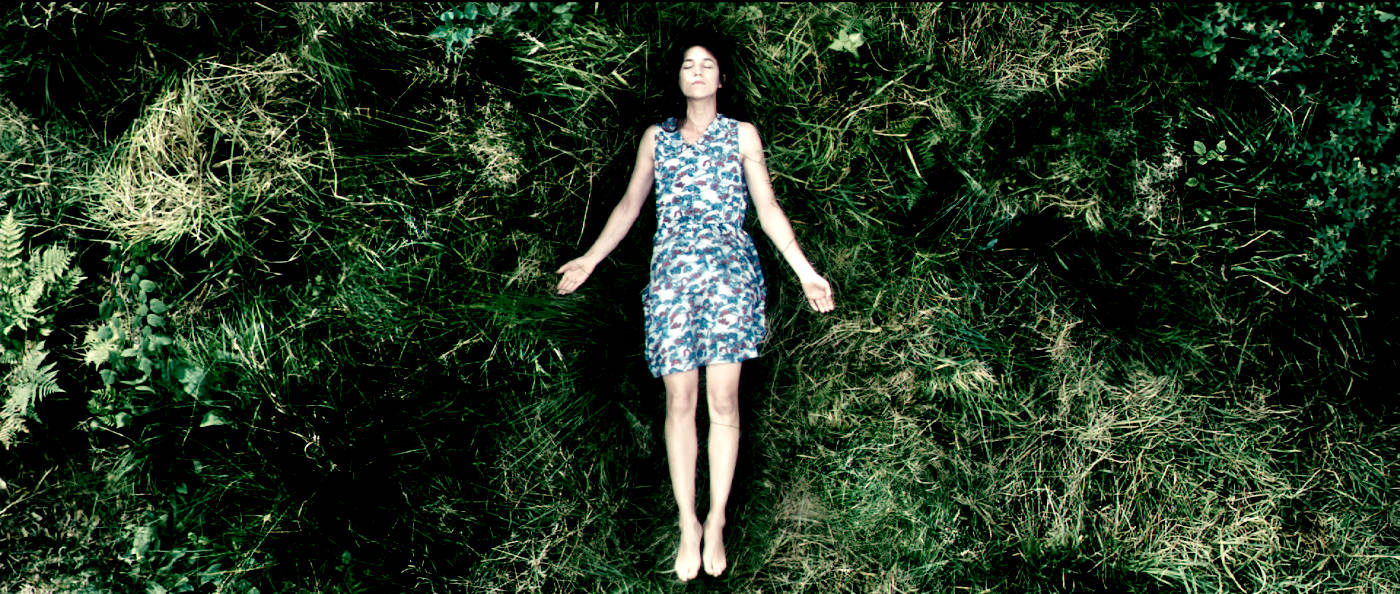
 I want to return to He's attempts to rationalise She's fear. He tells her in the early stages of the film that "grief is natural". He tries to make her realise that the things that she fears are not actually dangerous, and he does this at first by seemingly hypnotising her and making her go into Eden, lying down on the grass and "melting into the green". By doing this, he is almost forcing her to become part of the thing that she fears the most: nature. She is convinced that nature is evil, and when she is forced to be part of nature, she becomes "evil". She clearly believes in the ability of his words to become reality; this is illustrated through one of their discussions about her thesis, when She accuses him of finding her subject "glib". She admits to never having finished her thesis, saying that "all of a sudden, it was glib". If this is the logic we are to follow, it might well be that He makes his biggest fatal mistake (other than claiming, in the role play mentioned above, to be all of the things that she is afraid of...) when he tells her that "your thoughts distort reality. Not the other way around". Her thoughts, her way of seeing the world, do indeed distort and change reality for both of them.

He believes that She is suffering from anxiety, and tries to persuade her that "anxiety can't make you do something that's against your nature". In response, she certainly does her best to convince him of the true nature of, well, nature. And finally, in yet another attempt to rationalise, He tries to explain to her that "obsessions never materialise. It's a scientific fact". Ironic, then, that her obsession with gynocide influences him to put an end to it all in the specific way that he does.

(I have a feeling that I might return to this one.)

Wednesday, 10 November 2010

Why I Hate Torture Flicks

Credit given where credit is due: "I Know Who Killed Me" is an excellent title for a horror film. The rest of it isn't much to write home about  – although obviously I still have some things to say about it, or I wouldn't have started a blog post talking about it. Anyway… I don't know enough about the torture porn subgenre to know if this properly counts as one of those films (yes, I've seen Saw, boring boring boring, will return to this below), but it certainly got me thinking about the phenomenon as a whole. So, even though I Know Who Killed Me (2007) has a great title, and could potentially have been a very traditional mad scientist/lunatic avenger crossover story, it never quite hits the spot. New use of traditional themes is hardly anything new for the horror genre, in fact (as I suspect you will be aware…) this is the foundation for the entire, excellent genre as a whole. HOWEVER (yes, capital letters, because this is a big one) – a traditional theme can still be presented in an original way. In fact, if you want anyone to take any interest in the story that you're trying to tell, that would probably be a good way of going about it. And no, Chris Sivertson and Jeff Hammond, trying to tell a dozen different stories in one single hour-and-a-half flick does not necessarily count as "originality". Instead, it makes it a lot harder for the viewer to try and determine what the hell is actually going on, and what on earth you're trying to get at with your film.


 I found Saw (2004) really boring. I mean, really boring. I've heard loads of people say that the find the "story" intriguing, and I genuinely just don't buy it. I don't even remember most of the story, apart from a desperate wife, insignificant kid, standard retiring police officer, regretful husband (OR HE MIGHT HAVE SEEMED REGRETFUL OR ANY OTHER KIND OF THING IF THE MAN HAD POSSESSED EVEN THE SLIGHTEST HINT OF ACTING SKILLS) and the very same deranged avenger kind of plot as mentioned above. What more do you really need to know? You're not watching Saw for a meaningful story or insightful psychological profiles, you're not even watching it for the hot girls because there aren't any. You're watching it because you want to see exactly how the characters will be tortured, you pervert. You want to see every blood-spattering, overly graphic detail of their bodies being ripped apart by a psychopath (sometimes indirectly, obviously). Either that, or you're covering your eyes and turning away every time something gross happens (which, with this subgenre, would mean everything "essential") but still want your friends to know that you're real tough because you sat through it without wetting your pants. I literally don't see any other possibilities. Pushing your limits, sure, I did that once when I was 16. I got over it.


The term "torture porn" is a strange one. Even though I'm fully aware of what it's meant to describe, every time I hear it I still kind of imagine it to be some kind of sick, super fetishistic and super exploitative porn. As in, still dealing with sex. Because that's what porn is meant to be about, unless I've got it all wrong (of course even this can still be debated and long live postmodernism for that, but this is neither the time nor the place for it). And while "torture porn" might possess those other, erm, qualities, it's not about sex. Not in any obvious way, anyhow. But as my imagination just proved, the term does carry some rather effective associations – and I think I've concluded that I think it means the following: the torture is to "torture porn" what sex is to plain porn. It is the essential element. And it's also making a statement about the interested viewer. You don't care about the story, be it a visit from the plumber or Lindsay Lohan's missing twin sister, and you don't care about the characters. You want to see some genitals, or alternatively some body parts being chopped off. Up close. You want to hear the woman scream.

Of course, horror films and porn have always (or "always" if you prefer) been linked, especially on academic levels. And it's hardly surprising: they are both body genres as the ever faithful Carol Clover put it. They are both concerned with the physical and both genres have undeniably touched upon aspects of gender politics throughout the history of their existence. And if you really want to think about, I'm sure you could make a very convincing argument that they're both inherently disrespectful (for lack of a better word) to the idea of human nature with which we normally like to associate ourselves. Yes, I'm speaking for everyone. Get your own damn blog. No, I won't read it.

I have a very genuine love for the horror genre as a whole. I love the overall geekiness of it, self-referencing and the in-jokes, I love the villains and I even love some of the vitims (for example, it's not that rare for me to think of Leatherface and Ripley as closer "friends" of mine than a lot of real life people that I know). I love that a horror film can bring a smile to my face no matter how bleak the story at hand might seem to be at first sight, or to the untrained eye. The films that I'm referring to in this post do none of those things. Imagine what The Texas Chain Saw Massacre (1974) would have been if it had been made in this tradition? (Don't even bother mentioning the remake, I'm not going to watch it.)


I struggle to see any creativity in the torture porn subgenre as a whole. I don't see how someone can defend spending their time making films if the only thing that they have to grab the audience's attention with, is what I like to call the car crash syndrome (you know you shouldn't watch, but you can't help yourself). It's not big and it ain't clever, and it isn't even entertaining. It's too much like certain infamous internet forums but robbed of even that desperate level of humour. (One example that I haven't yet watched but have higher hopes for is The Human Centipede. That looks fun!) I can watch gore, I can watch people being hacked apart and hopelessly pleading for their lives. But if that's all there is to it – what's the point?

Saturday, 30 October 2010

Link sharing time!

The Thing fan fiction – written from the perspective of the Thing. Thanks to whoever sent me this link, but I can't remember who that was just now. Oh well.

Another take on Death of the Final Girl – really quite different to what I was saying in my previous post, definitely an interesting read too.

Hello Sidney – All things Scream, complete with live countdown to Scream 4.

Also, I highly recommend you pick up the November issue of Total Film. It has one of those "Top 25 Horror Films" things, but what makes this one great is that all the films in the list have been voted in by (in)famous horror directors and other horror personalities, so it's not just the geeky wankery film mag editors list. Although obviously those can be quite good as well. THE BEST FILM IN THE WORLD made it to number 1 as well, which nearly brought a tear to my eye (in all seriousness).

Finally, if you haven't been watching the History of Horror documentary series on BBC 4 you should be sure to search them up on t'internet (some clips are on youtube but I don't think the full episodes are there yet). The first episode covers all the really early stuff (Dracula, Frankenstein, etc), the second focuses mostly on Hammer films and some other British stuff from that era. The third one is bound to be the most popular one as it kicks off with Psycho and guides you through a very basic history of classic American slashers.

Oh, and... Happy Halloween.


Wednesday, 20 October 2010

Death of the Final Girl

In case you hadn't noticed, I'm really quite fond of Ellen Ripley, and the first Alien film in particular. Another thing that you might have noticed is that I love discussing the Final Girl concept. But one thing I haven't yet mentioned is my (relatively) newfound love for the Norwegian horror/slasher franchise Cold Prey. And within the space of one week I have watched the last, and allegedly final instalment of the Cold Prey series and Alien: Resurrection (1997), so what could be more natural than to take some time to discuss the role of the Final Girl in these two films?


First of all though, a bit of background on the Cold Prey series. The first two films are traditional "make one film, then a sequel" stuff: the second film follows right where the first one left off, so it hasn't moved far in time or geographically speaking, and the Final Girl from the first film relives the nightmare in the sequel. But where the original is bleak and slightly Shining-esque (with more blood and screaming), the sequel is more purely slasher-action, and so many purists and occasional horror watchers uphold the original as the better of the two. I think they complete each other and I've only watched them in one go which works perfectly. The Final Girl in these two films, Jannicke, is what really makes them work so well. She is actually very sympathetic, as opposed to hordes of other Final Girls. She is clever (medical student), beautiful, caring, strong in every sense of the word, but most of all she is thoroughly human.


Jannicke always reminded me of Ripley, in more than one way. Maybe it is fitting, then, that in both CP3 and A:R the Final Girls are changed. CP3 is a prequel – different actress, different story, different character (even though it is a prequel, I will still treat it as what it is: the last of three films). Sure Sigourney Weaver still plays "Ripley" in A:R, but it isn't really Ripley. It is her clone. Her 8th clone, to be precise. How much needs to be said about the earlier clones, in this context? Not necessarily much. If No. 8 is seen as embodiment of the ideal Final Girl (physically strong; maintaining a cool, ironic distance to what is happening around her; complex knowledge of her enemy, to which she is yet strangely drawn; much smarter than everyone surrounding her, etc.) then clones 1-7 are what have gone before her. Failed experiments; the clones are either too much like an alien and too little like a human, or too much like a little baby and not enough like a grown creature. The last of the previous clones even begs No. 8 to kill her. Clones 1-7 are outdated, imperfect representations of Final Girls. They are Sally, Nancy, Laurie, Stretch, Alice and all of the others.

The Final Girl in CP3, Hedda, is mostly just annoying. But she possesses some of the ideal Final Girl skills or characteristics as lined out by No. 8 in A:R: she understands more than anyone else, she can endure more and accomplish more, she can run for longer and hide better, she can keep others (barely) alive, she doesn't think twice about pulling the head of an arrow out through her boyfriend's shoulder when she is convinced that it will save him, or indeed about setting fire to a house in which she and her boyfriend are hiding from the killer as long as she is convinced that the fire will kill the Big Bad and they will be able to escape. She finds her kidnapped and tortured friends and attempts to save them. She's a bit like a female MacGyver, which in itself is not a bad thing, but not really something that belongs in a horror movie. It isn't something that brings the audience to the edge of their seats in the same way as a normal girl with more human characteristics might have. It has been said many times by several critics that the killers in these films are not (entirely) human, and it looks as if the Final Girls are trying to catch up. No. 8's very blood is of a superhuman nature, and it is stressed again and again how she is not like us. But where does that lead us? Two creatures with superhuman powers and a lack of human trademarks such as doubt, regret, empathy, forever locked in an impossible battle where no one can win and no one can die? Has the evolution of the Final Girl, which was praised by many when it moved on from Sally (passive resistance) to Laurie (active resistance) to Nancy (actively seeking the killer to set things right), been allowed to run on for too long, and spiral out of control? If she is not someone that we the audience can identify with and feel for and root for, is there any point to her at all?


Of course, Hedda's status as a Final Girl could easily be up for discussion. She does after all die, which is more or less the one thing that a Final Girl just doesn't do. But you see, she isn't killed by The Killer, rather she is accidentally shot by a policeman who thinks she's trying to shoot him. Anyway, the point is she isn't one of the victims of the actual killer, strictly speaking; so in my book she still counts as Final Girl. Besides, Ripley dies as well, remember? She is not directly killed by one of the aliens, but kills herself and it in the process. So they both die because of their enemies, but not by their hand. It is far more human instincts that get them both killed in the end, and we're back to human vs. superhuman.


So I guess my main point is this: the Final Girl needs to be human. She can't be someone who is "better" than us, or the whole point of her disappears. The original Final Girls are completely normal (and maybe not even sympathetic or likeable, because many humans aren't) and that's why it is exciting to see what happens to them and how they make it through so many horrible incidents. It is why we can identify, and it is ultimately what makes a horror film into what it is: a scary movie.

PS: I was going to discuss how in A:R they have a "Father" whereas in Alien they have a "Mother", but I couldn't really think of anything interesting to say that wouldn't have been horribly longwinded. Any thoughts on this, or anything else, feel free to leave a comment below.